


{{product.productLabel}} {{product.model}}
{{#if product.featureValues}}{{product.productPrice.formattedPrice}} {{#if product.productPrice.priceType === "PRICE_RANGE" }} - {{product.productPrice.formattedPriceMax}} {{/if}}
{{#each product.specData:i}}
{{name}}: {{value}}
{{#i!=(product.specData.length-1)}}
{{/end}}
{{/each}}
{{{product.idpText}}}
{{product.productLabel}} {{product.model}}
{{#if product.featureValues}}{{product.productPrice.formattedPrice}} {{#if product.productPrice.priceType === "PRICE_RANGE" }} - {{product.productPrice.formattedPriceMax}} {{/if}}
{{#each product.specData:i}}
{{name}}: {{value}}
{{#i!=(product.specData.length-1)}}
{{/end}}
{{/each}}
{{{product.idpText}}}


stainless steel fastening systemTOP MOUNTING WIRE MESH
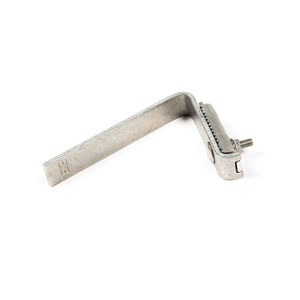
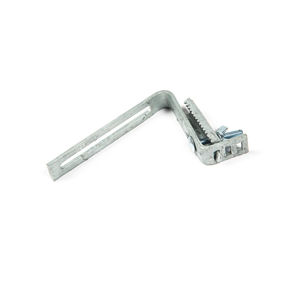
A flat tension profile (tension strip) is equipped with clevis bolts. Using the bolts, the wire mesh element is suspended into the substructure. At the same time the bolts are used to apply tension at the top mounting point.
HAVER & BOECKER OHG

... incorporated into the mesh with the round rod. The cable mesh element can now be tensioned with a continuous angle iron or single fastening brackets. ...
HAVER & BOECKER OHG

... Using incorporated round rods, the wire cloth elements are attached to on-site triangular fastening brackets, which again are attached to the sustructure. ...
HAVER & BOECKER OHG


... and mobile partition walling system is used to fabricate internal partition walls, distinguishing themselves by a tempered glass pane fixed in clamp profiles which is their structural component. The components of this system ...
Aluprof S.A
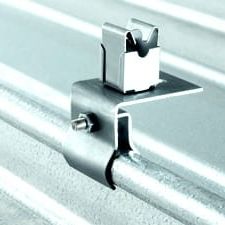

... Kalzip roof and wall systems are flexible and adaptable to the architectural and technical requirements of industrial, private or public buildings and they offer a safe as well as effective protection against lightning strikes on buildings ...
Kalzip
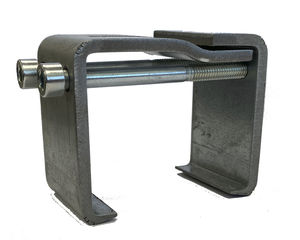

... Accessory to fix photovoltaic systems only on the Delfos 1150 and Delfos 1000 roof sandwich panels, without drilling. Delfos PV fastener has been designed to be coupled to the ribs of the Delfos sandwich panel, avoiding ...
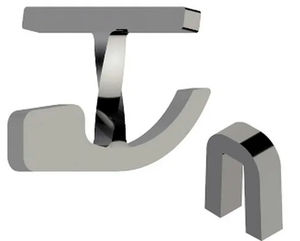

... property damage. Skipper is the universal windproof system for outdoor raised flooring. The system is designed to solve the problems caused by strong winds and withstands up to 900 pa/140 km/h. Placed between the tiles, ...
IMPERTEK Srl
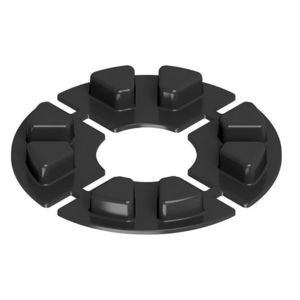
... reducing on-site installation time. GravityFit is compatible with all accessories in the GravitySystem range, while keeping the system easily accessible for inspection. GravityFit, designed to simplify the installation of GravityGrid, ...
IMPERTEK Srl
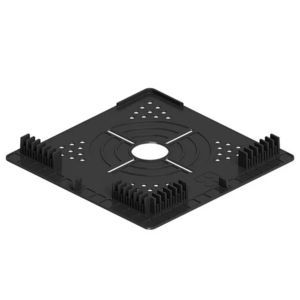
... along the perimeter of risers and steps in outdoor raised floorings, offering a stable, precise, and secure vertical edge. The system consists of two plates: one placed at the base of the support and the other on the head. The upper holes ...
IMPERTEK Srl


... galvanized profiles model is used for the application of plaster-board ceilings, halving the laying time compared to traditional systems with guides and channels. B43: innovative solutions for interior construction. B43 Shaped-in ...
Atena spa

... and technical-aesthetic features of B35. The model with punched cross T is used to realize the new Atena sealed health care system "35 Syncro Evo". B35 shaped-in clip Overlap cross T connection Elegant and strong Maximum load 15 ...
Atena spa
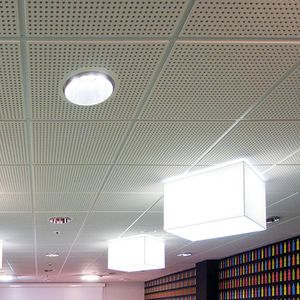
... Properly conceived to realize light metal ceilings in steel, aluminum or expanded metal panelling, EASY FOX T-grid of ATENA STEEL STRONG range features a quick-coupling clip made of stainless steel, without bends: easy to install, resistant and safe. Fox ...
Atena spa

GFS Design

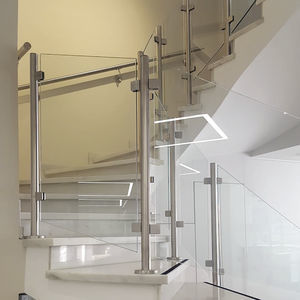
... The canopy product, made by glass and stainless steel, has always been developing much more importance in the architectural field for several reasons. The glass canopy actually seems to be an efficient and delicate method to realize the roof of any ...
GFS Design
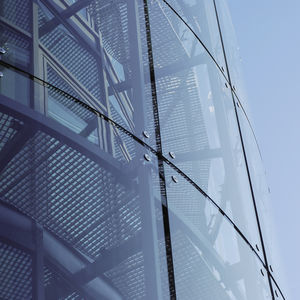
... stainless steel. The GFS Spider system stands out for the high flexibility of its fixings, which allow for the construction of much larger glazed surfaces—using the same glass thickness—compared to traditional façade systems. ...
GFS Design
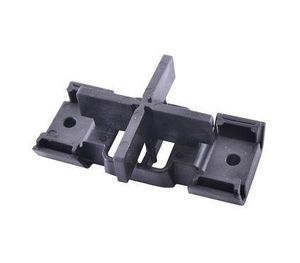

Thickness: 3 mm
DescriptionClip-in tile spacers designed to fit into the PROFILDECK® joist rail. They create a regular 3 mm drainage gap between tiles and provide 10 mm lateral movement. Engineered to allow staggered laying. Breakable arms enable layout adjustments. ...
JOUPLAST
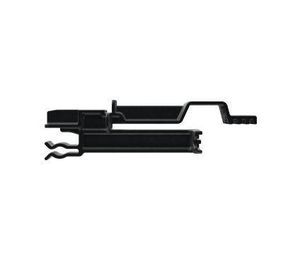
... Description
The PROFILDECK® fixing clip for clip-on finishing profiles attaches directly to the PROFILDECK® aluminium joist (H27 and H55). Designed for slab decking, this accessory secures the profile and enables a quick, easy lateral finish.
Compatibility
- Deck
JOUPLAST
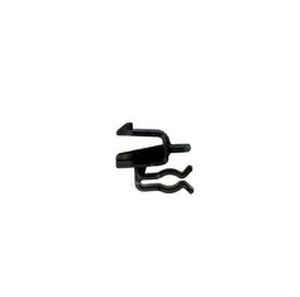
Specific weight: 0 kg
... br>Use 1 clip per slab panel. Use 2 clips for a corner. Position the clip into the adhesive dimples of the slab
panel before placing the
panel on the pedestal. Installation video available (product-associated video resource).
Technical ...
JOUPLAST


... selection of fastening systems types that suit your every need. Standard (or single) fastening system is composed of 4 parts: 1 washer or upper clip 1 screw 1 bottom clip (or ...
JK TECHNIC

... JK Technic fastening systems allow you to fix gratings to metal structures quickly and securely. The choice of fastening system type depends on various criteria: grating type, mesh gauge, ...
JK TECHNIC
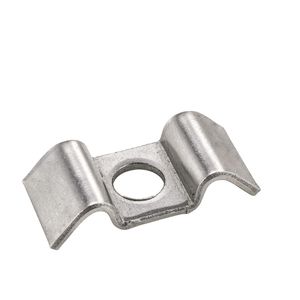
... JK Technic fastening systems allow you to fix gratings to metal structures quickly and securely. The choice of fastening system type depends on various criteria: grating type, mesh gauge, ...
JK TECHNIC
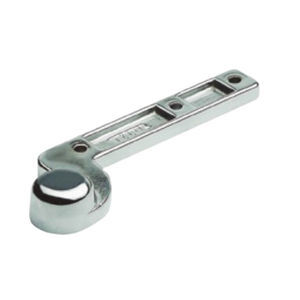

Specific weight: 100 kg
... types of installations with wooden, aluminium, or similar doors Swing pivots for flat frames Upper pivot with retractable system Offset pivots for rebated frames Compatible with door closers C 16/19 and CI 13/16 Door size: 1200 ...
Trivel
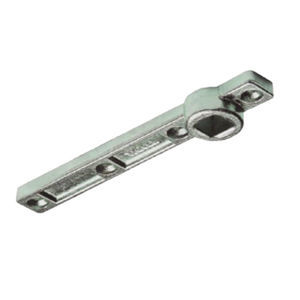
Specific weight: 100 kg
... types of installations with wooden, aluminium, or similar doors Swing pivots for flat frames Upper pivot with retractable system Offset pivots for rebated frames Compatible with door closers C 16/19 and CI 13/16 Door size: 1200 ...
Trivel
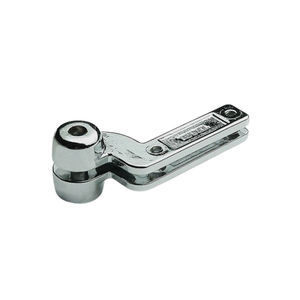
Specific weight: 100 kg
... types of installations with wooden, aluminium, or similar doors Swing pivots for flat frames Upper pivot with retractable system Offset pivots for rebated frames Compatible with door closers C 16/19 and CI 13/16 Door size: 1200 ...
Trivel
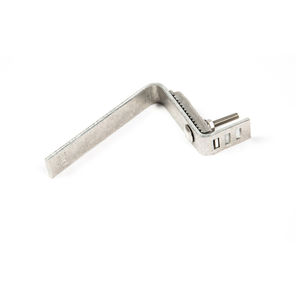

ARALTEC
ARALTEC
ARALTEC


... wall mounting with oblong hole adjustment concealed screws with cover plate glass thickness 6 / 8 / 10 mm surface colors ZN5 = gloss chrome ZN1 = matt chrome ZNPVD22 = stainless steel optic ZNPVD20 = gold optic ZNPVD35 = black matt ZN135 = ...
PAULI FRANCE

... wall mounting with oblong hole adjustment concealed screws with cover plate glass thickness - 6 / 8 / 10 mm Oberflächen - ZN5 = gloss chrome ZN1 = matt chrome ZNPVD22 = stainless steel optic ZNPVD20 = gold optic ZNPVD35 = black matt ...
PAULI FRANCE
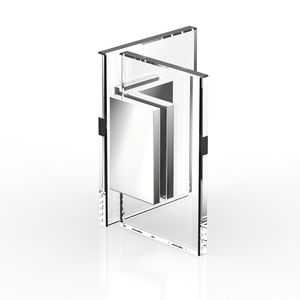
... concealed screws with cover plate glass thickness 6 / 8 / 10 mm surface colors ZN5 = gloss chrome ZN1 = matt chrome ZNPVD22 = stainless steel optic ZNPVD20 = gold optic ZNPVD35 = black matt ...
PAULI FRANCE

... -to-install fastening system. It consists of a rod inserted inside the spiral, with attachment eyebolts installed along the length of the rod. This allows the panel to be supported from the top, bottom, ...
Codina Architectural
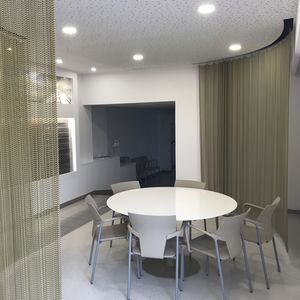
... The TF-40 is a fastening system custom-designed to meet the needs of the customer, offering a unique visual effect depending on the percentage of corrugation to be shown. This movable fixation allows the mesh to be stretched ...
Codina Architectural
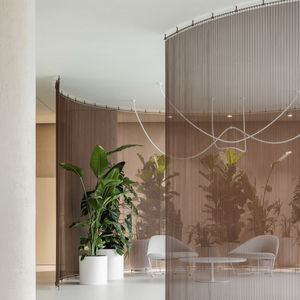
... multiple design options. The fixing bar can be curved to create a curved panel and powder coated in the desired color. In addition, this system can be combined with the TF-60 system. ...
Codina Architectural


... barefoot on your deck because there are no visible and apparent fasteners -Robust and resistant to moisture Cobra Hybrid concept The Cobra® Hybrid 8-18 clip is a matte black dual-material fastener that prevents ...


... Easy Ω), our substructure systems are able to be adapted to whatever the look of a building needs to be. MAIN FEATURES: • Maximum length up to 4000 mm • The strength of galvanised steel • Designed for face fixed system • ...

... stainless steel and aluminium ) with different shapes (ConneX® Easy L – ConneX® Easy C – ConneX® Easy Ω), our substructure systems are able to be adapted to whatever the look of a building needs to be. • Specifically designed to obtain ...
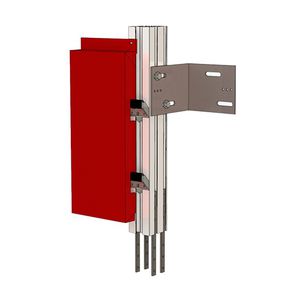
... stainless steel and aluminium ) with different shapes (ConneX® Easy L – ConneX® Easy C – ConneX® Easy Ω), our substructure systems are able to be adapted to whatever the look of a building needs to be. MAIN FEATURES: • Specifically ...

Ghisarredo
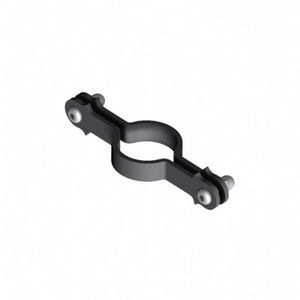
... Tie formed by two S235JR (UNI EN 10025) steel brackets that enable the assembly of the sheet to the post. The kit consists of two mirrored shaped parts with Ø09mm holes. Stainless steel hardware. PAINTING Coat of two-component zinc phosphate primer ...
Ghisarredo
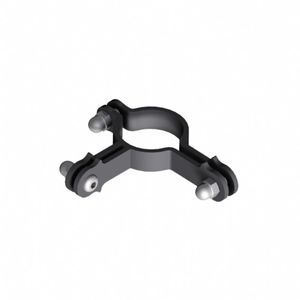
... Tie formed by two S235JR (UNI EN 10025) steel brackets that enable the assembly of the plate to the post. The kit consists of two shaped parts with Ø09mm holes, one of which has a 90° appendage. Stainless steel hardware PAINTING Coat of two-component ...
Ghisarredo
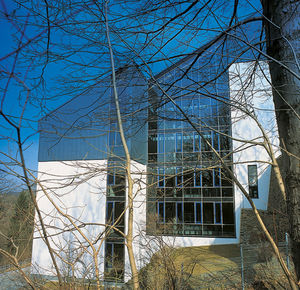

... The VISS Fire system with a wide range of additional components, such as fire-proof anchor, stainless steel clamping sections etc. keeps the glass in the right position in the event of fire and prevents this way the entry of fire and ...
JANSEN


... Comenza. Sekkei means “design” in Japanese, and each handrail system in this line is characterized by a unique design and avant-garde aesthetic. Furthermore, all Sekkei Handrail systems meet the CTE’s regulatory safety ...
COMENZA


... Ali M is an Aliva substructure system for porcelain tiles cladding. The system, in aluminium alloy, is composed of brackets and vertical mullions, with slots into which stainless steel clips, coloured to match the tiles, ...
ALIVA


... new flask Riblok allows to fix a new roofing to the old roof without punching it. This is possible thanks to a self-locking system whichs exploit the existing holes of the old roof and which precludes the dispersion of asbestos fibres ...
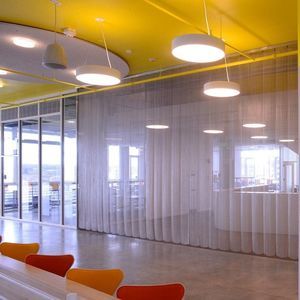

... and locking mechanisms. Floor pins or bottom track are other optional features which can enhance the security of the curtain system. ...
Cambridge Architectural Mesh
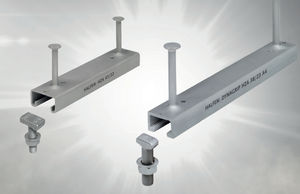

DYNAGRIP HALFEN Channels are a new development for applications with high loads, where the channel is cast in vertically. The special toothed channels guarantee a positive mechanical connection, additionally the HZA DYNAGRIP HALFEN Channels can safely ...
HALFEN
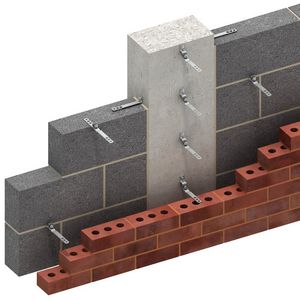

... While standard cavity wall ties create a solid connection through which sound waves can travel, Ancon Acoustic Wall Ties feature a highly engineered, pre-compressed, acoustic isolation element. Products in this range provide the necessary structural ...
Ancon Building Products


... The Kebony H-clip fixing system is designed for the hidden installation of Kebony Clear decking boards with side slits. The system gives a uniform 7 mm gap between boards and a 10 mm spacing between the ...
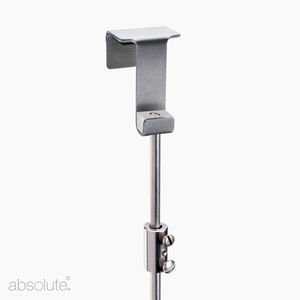

... have a neoprene pad on the inner surface that sits on the panel preventing sideways slip and cushioning the load. Our Panel Clips with Hanging Sets include a pair of Panel Clips, as well as, a pair ...
Absolute Museum & Gallery Products Ltd
the best suppliers