

Multi-fuel boilers offer versatility and efficiency by allowing the use of different types of fuels, making them a popular choice for businesses looking to optimize their heating solutions. As you browse through our selection of multi-fuel boilers, it is essential to consider various factors that influence their pricing to ensure you find a product and manufacturer that meet your specific needs. This guide will help you navigate the pricing landscape and provide valuable tips for requesting quotes effectively.

Factors Influencing Multi-Fuel Boiler Prices
- Fuel Compatibility: Boilers that support a wider range of fuels typically cost more due to their complex design and technology.
- Capacity and Output: Larger boilers with higher heat output are priced higher as they cater to industrial-scale operations.
- Efficiency Ratings: Higher efficiency boilers can lead to long-term savings and often come with a higher initial price tag.
- Brand and Manufacturer: Well-known brands may charge premium prices due to their reputation and reliable customer support.
- Additional Features: Advanced controls, automation, and safety features can increase the price.
Price Ranges
- Entry-Level Products: Typically range from $5,000 to $10,000, suitable for smaller operations with basic needs.
- Mid-Range Options: Priced between $10,000 and $20,000, offering a balance of features and capacity.
- High-End Models: Cost $20,000 and above, providing advanced technology, high efficiency, and larger capacities for demanding applications.
Negotiating the Best Quote
- Clearly define your requirements and budget to manufacturers to receive tailored quotes.
- Inquire about bulk purchase discounts or long-term service agreements that may reduce costs.
- Ask for a breakdown of costs to understand where you might negotiate better terms.
Considering Additional Costs
- Installation: Factor in installation costs, which can vary depending on the complexity of the setup.
- Maintenance: Regular maintenance is crucial for efficiency and longevity, so consider service contract costs.
- Fuel Supply: Ensure a reliable and cost-effective fuel supply chain to maximize your boiler’s potential.
Conclusion
By understanding the factors that influence multi-fuel boiler prices and being prepared to negotiate effectively, you can ensure you receive the best possible quote. Remember to consider additional costs and long-term savings when making your decision. Utilize our marketplace's resources and tools to compare products and manufacturers, ensuring you find the best deals tailored to your professional needs.
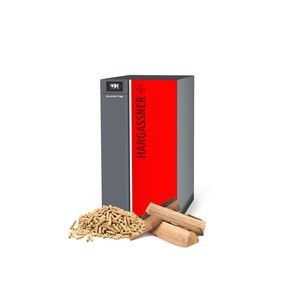

{{product.productLabel}} {{product.model}}
{{#if product.featureValues}}{{product.productPrice.formattedPrice}} {{#if product.productPrice.priceType === "PRICE_RANGE" }} - {{product.productPrice.formattedPriceMax}} {{/if}}
{{#each product.specData:i}}
{{name}}: {{value}}
{{#i!=(product.specData.length-1)}}
{{/end}}
{{/each}}
{{{product.idpText}}}
{{product.productLabel}} {{product.model}}
{{#if product.featureValues}}{{product.productPrice.formattedPrice}} {{#if product.productPrice.priceType === "PRICE_RANGE" }} - {{product.productPrice.formattedPriceMax}} {{/if}}
{{#each product.specData:i}}
{{name}}: {{value}}
{{#i!=(product.specData.length-1)}}
{{/end}}
{{/each}}
{{{product.idpText}}}

Power: 17 W - 30 W
Length: 1,080 mm - 1,080 mm
Width: 790 mm - 790 mm
... li>
Technical specifications
- General note: All values are to be assigned as follows: Log boiler / Pellet boiler.
- Maximum operating temperature: 85 °C
- Maximum operating pressure:
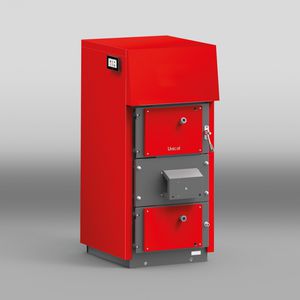

Power: 9.5 kW - 30.5 kW
Length: 660 mm
Width: 1,288 mm
... Bi- fuel boiler for solid biomasses, such as wood logs and pellet Burner fan placed downstream the combustion chamber. Misaligned combustion with downward reversed flame, with triple modulation: - modulation through ...
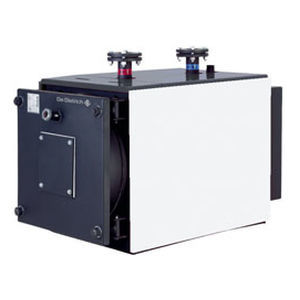

Power: 98.7 kW - 930 kW
Length: 700, 1,125 mm
Height: 815, 1,200 mm
... The boilers in the CABK range are intended for heating only. They can be fitted out with a choice of oil or gas burner and a standard, B3, K3 or DIEMATIC m 3 control panel. Their steel single block two flue gas path heating body with ...
DE DIETRICH
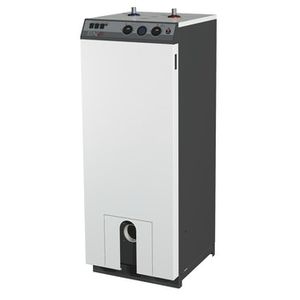

Power: 0 kW - 22.5 kW
... Floor standing oil combination boiler for residential use. 120 liter stainless steel corrugated tank immersed in the primary circuit. Control panel including: main switch, summer-winter switch, energy selection switch, manometer thermometer, ...
ACV


Power: 15,000 W - 40,000 W
... Two systems perfectly combined - The new dual fuel boiler SP Dual The SP Dual firewood and pellet boiler combines two well designed systems. It fulfills all the requirements for firewood and pellet fuels ...
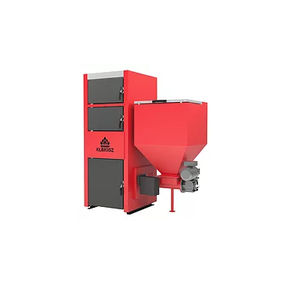

Power: 4.5 kW - 35 kW
... recovery area from flue gas, which directly translates into high boiler efficiency. Klimosz MULTIDUO is reliability and safety. The boiler has several independent thermal protections: boiler ...
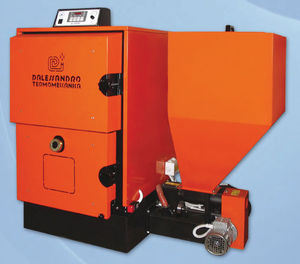

... Type Marine three-ways smoke boiler with water production for heating; Boiler shell in steel at 3 bar pressure; Doors for internal inspections and boiler cleaning; Cast iron burner with mechanical feeding ...
D'ALESSANDRO TERMOMECCANICA S.R.L.