
- Home page
- buying guide
- countertop
countertop
countertop: A technical guide
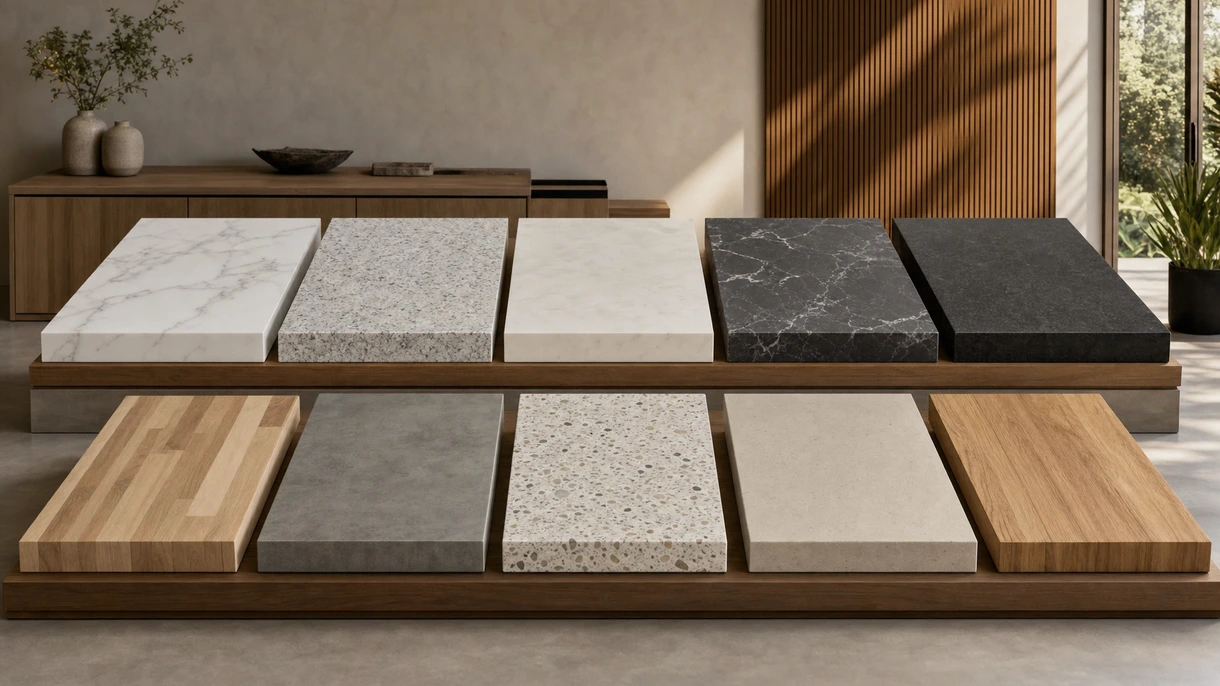
4 Criteria to choose your countertop
Material Porosity and Absorption
Low absorption rates prevent bacterial growth and staining, ensuring long-term hygiene and structural integrity in heavy-use commercial kitchens.
Impact and Scratch Resistance
High hardness ratings ensure the surface withstands heavy cookware and sharp tools without compromising the aesthetic finish.
Thermal Shock Stability
Resistance to temperature fluctuations prevents cracking or discoloration when placing hot pans directly from ovens onto work surfaces.
Chemical and Acid Resistance
Durability against harsh cleaning agents and acidic food residues is essential for maintaining appearance in professional food environments.
Available technologies and advantages
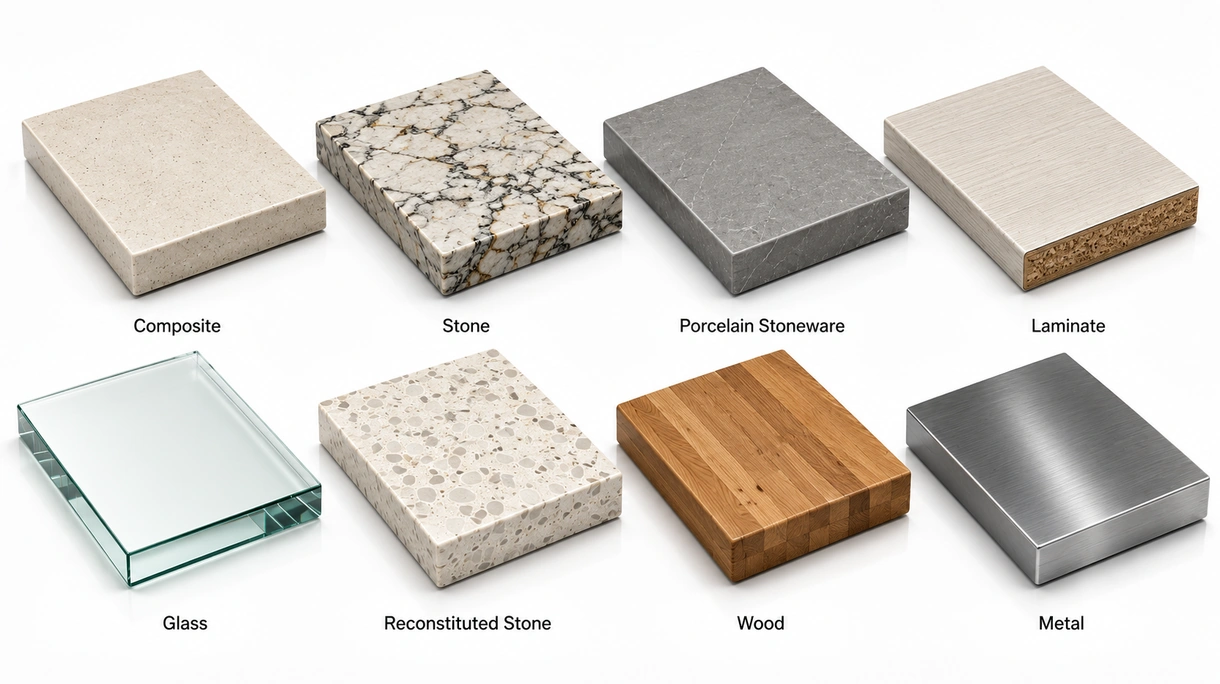
Engineered Quartz Composites
Combined with resin binders, these surfaces offer non-porous consistency and exceptional hardness through controlled industrial compression and vibration sequences.
Performance Trade-offs
This provides unmatched color uniformity and hygiene but lacks high heat resistance compared to natural stone, requiring frequent trivet usage.
Sintered Stone and Porcelain
Manufactured through extreme heat and pressure, these large-format slabs simulate natural minerals while achieving total porosity resistance and high UV stability.
Performance Trade-offs
This offers superior heat and weather resistance for outdoor kitchens but requires specialized fabrication techniques due to inherent material brittleness.
Solid Surface Acrylics
Composed of acrylic resins and alumina trihydrate, these materials allow for seamless joints and thermoforming into complex curved architectural surface shapes.
Performance Trade-offs
This enables easy repair and integrated sinks but is susceptible to scratches and damage from heavy high-temperature contact points.
6 expert tips
Prioritize non-porous sintered materials to reduce maintenance costs and ensure long-term hygiene in high-traffic hospitality kitchen environments.
Select large format slabs to minimize grout lines and joint failures in expansive commercial food preparation areas.
Evaluate the lifecycle cost by balancing initial material investment against durability and the frequency of surface refinishing.
Opt for matte finishes to hide daily wear and fingerprints in public retail or office pantry installations.
Specify matching backsplashes to ensure a cohesive aesthetic while simplifying the cleaning protocols for wall-to-counter transitions.
Ensure edge profiles are rounded to prevent chipping and improve user safety in dense residential or public spaces.
Always verify the technical certification to ensure compliance with local building safety standards and long-term durability.
Innovations and Trends
Recycled content and low-emission manufacturing processes meet strict environmental sustainability requirements for global green building certifications.
Concealed induction technology within porcelain slabs optimizes workspace functionality while providing a seamless aesthetic for modern kitchen designs.
Silver ion integration into the material structure provides permanent protection against bacterial proliferation in healthcare and food sectors.
Transitioning from petroleum-based resins to plant-derived alternatives reduces the environmental footprint without compromising structural surface performance.
*Prices are pre-tax. They exclude delivery charges and customs duties and do not include additional charges for installation or activation options. Prices are indicative only and may vary by country, with changes to the cost of raw materials and exchange rates.
About ArchiExpo
ArchiExpo is a marketplace that offers B2B players a complete experience, from product sourcing to purchase. ArchiExpo is an entity of VirtualExpo Group.
Are you a buyer?
Are you a supplier?