
- Home page
- buying guide
- expansion joint
expansion joint
expansion joint: A technical guide
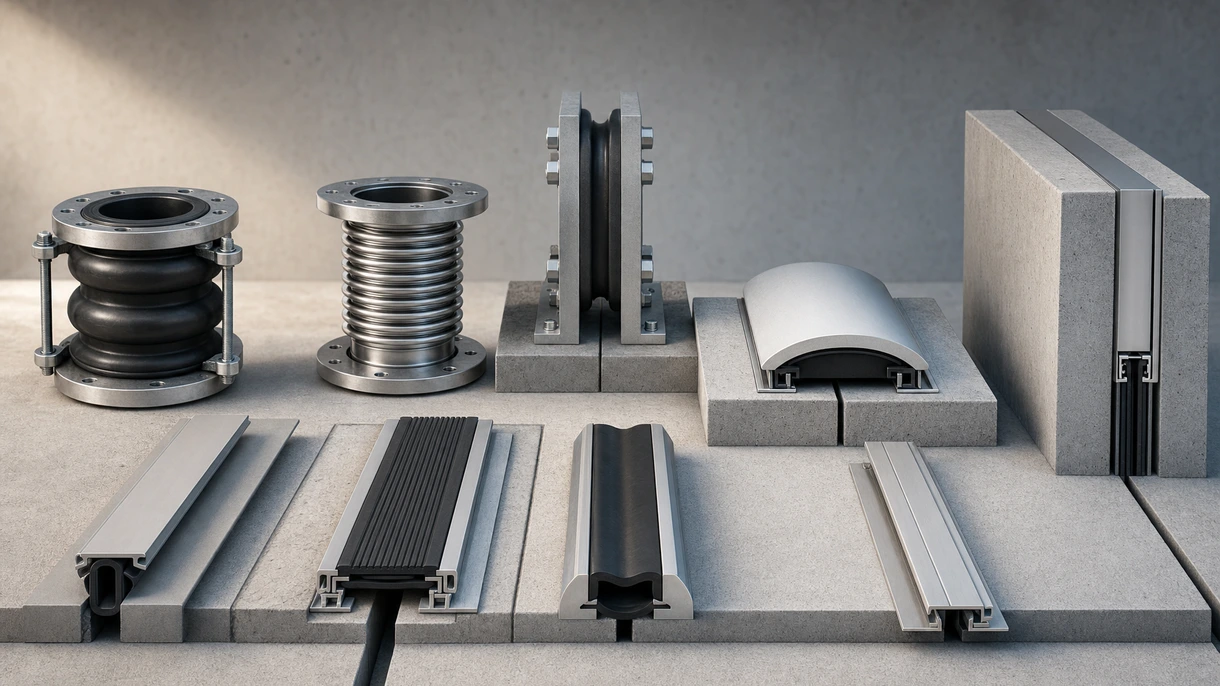
4 Criteria to choose your expansion joint
Total Movement Capacity
Essential for accommodating thermal expansion, seismic shifts, and structural settling to prevent cracking and catastrophic finishing material failure.
Load Bearing Performance
Must withstand specified point loads and heavy traffic from vehicles or pedestrians without compromising the joint or surrounding flooring.
Chemical Material Compatibility
Ensures the joint seal resists corrosive cleaning agents, UV exposure, and environmental pollutants common in commercial or outdoor installations.
Fire Rating Compliance
Critical for maintaining compartmentation integrity in multi-story buildings, ensuring the assembly meets specific UL or EN safety standards.
Available technologies and advantages
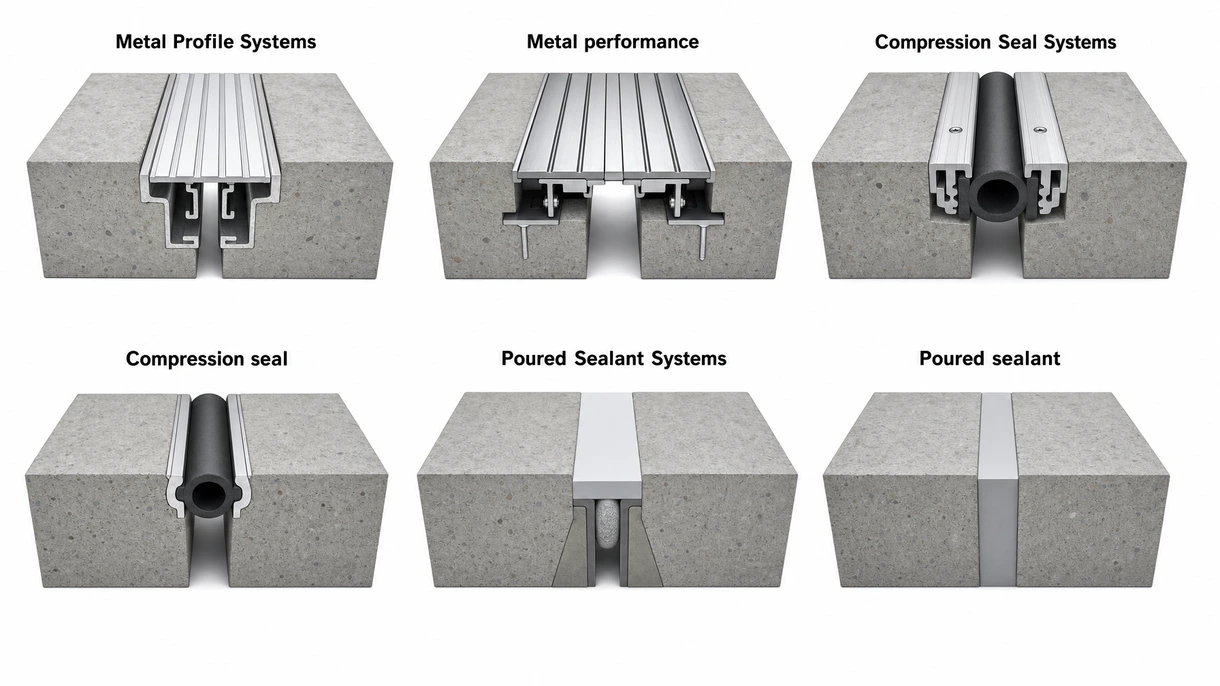
Metal Profile Systems
These mechanical assemblies utilize aluminum or stainless steel frames with flexible inserts for heavy-duty commercial floors and high-traffic areas.
Metal performance trade-offs
Durability and high load capacity are primary benefits, yet high costs and complex installation requirements represent significant operational trade-offs.
Compression Seal Systems
Pre-compressed foam or neoprene profiles are wedged into gaps to provide watertight seals for parking decks and exterior facades.
Compression seal limitations
Excellent moisture protection and ease of installation are offset by limited movement ranges and susceptibility to UV-driven material degradation.
Poured Sealant Systems
Liquid-applied polyurethane or silicone sealants are cured in situ to bridge smaller gaps in pedestrian-only or vertical interior surfaces.
Poured sealant constraints
These offer low initial costs and seamless aesthetics but provide minimal structural support and require frequent labor-intensive maintenance cycles.
6 expert tips
Prioritizing structural movement calculations from certified engineers ensures the selected joint profile prevents expensive floor finish delamination.
Always verify the technical certification to ensure compliance with local building safety standards and long-term durability.
Select high-grade stainless steel for high-traffic environments to minimize long-term maintenance costs and preserve aesthetic quality over time.
Coordinate joint placement with the structural grid during design to avoid complex onsite modifications and reduce installation labor costs.
Invest in moisture-resistant seals for all subterranean or exterior applications to prevent water infiltration and costly structural steel corrosion.
Document thermal expansion coefficients to match joint elastic properties with the specific floor substrate for seamless architectural performance.
Innovations and Trends
Embedded IoT technology tracks real-time structural shifts, providing data for predictive maintenance and post-earthquake safety assessments of building integrity.
New eco-friendly thermoplastic elastomers reduce carbon footprints while maintaining technical performance levels required for LEED and BREEAM certifications.
Low-profile designs integrate seamlessly with thin-set tiling, eliminating trip hazards and meeting ADA requirements for accessible public spaces.
Intumescent technology within the joint provides higher fire-resistance ratings, ensuring compliance with tightening international safety codes for skyscrapers.
*Prices are pre-tax. They exclude delivery charges and customs duties and do not include additional charges for installation or activation options. Prices are indicative only and may vary by country, with changes to the cost of raw materials and exchange rates.
About ArchiExpo
ArchiExpo is a marketplace that offers B2B players a complete experience, from product sourcing to purchase. ArchiExpo is an entity of VirtualExpo Group.
Are you a buyer?
Are you a supplier?