
- Home page
- buying guide
- wall tile
wall tile
wall tile: A technical guide
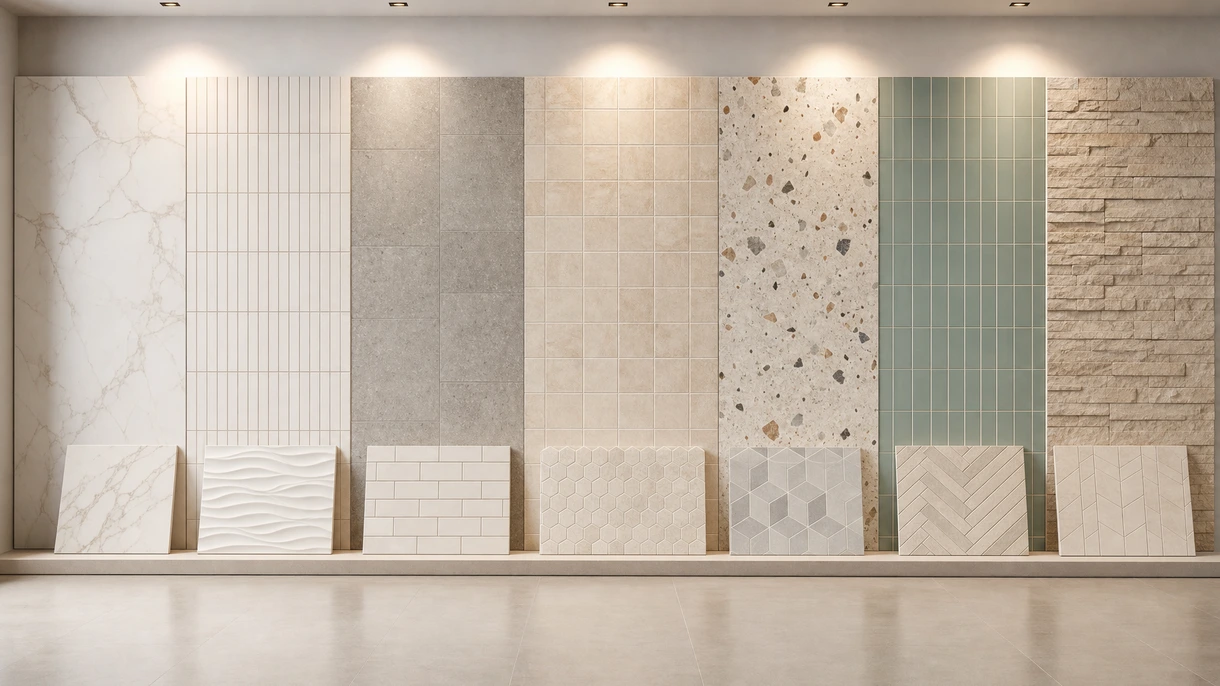
4 Criteria to choose your wall tile
Water absorption rate.
Determines suitability for wet environments, ensuring long-term structural integrity and mold prevention through low porosity ratings.
Chemical and stain resistance.
Essential for hospitality and healthcare settings to withstand aggressive cleaning agents while maintaining aesthetic quality and surface hygiene.
Dimensional tolerance precision.
Tight calibrated edges allow for minimal grout joints, facilitating easier maintenance and meeting high-end architectural aesthetic specifications.
Surface mechanical strength.
While primarily for floors, high ratings on walls ensure durability against impact in high-traffic commercial corridors and lobbies.
Available technologies and advantages
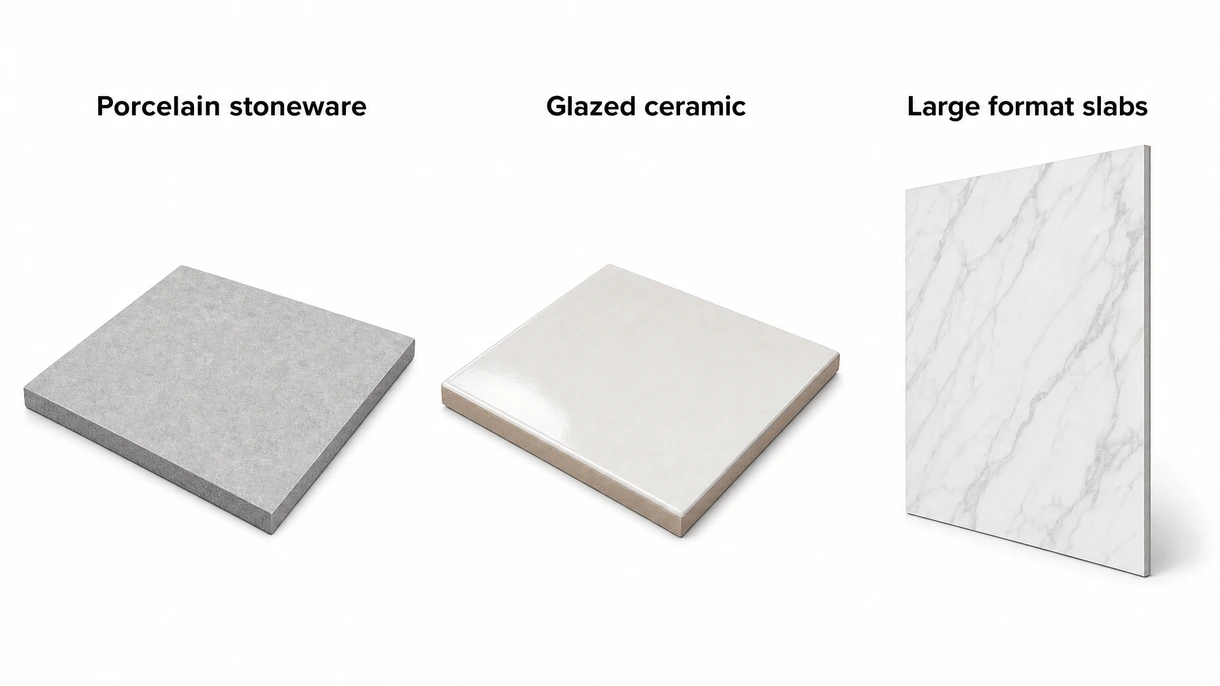
Porcelain stoneware.
This high-density vitrified material offers superior mechanical strength and near-zero porosity compared to standard ceramic, specifically for demanding commercial or exterior vertical applications. Advantages include extreme durability. Limitations involve difficult cutting. The operational trade-off prioritizes higher initial cost for significant long-term longevity.
Glazed ceramic.
Traditional clay-based body with a decorative glaze layer, providing a more lightweight and cost-effective alternative to porcelain for interior light-commercial vertical wall applications. Advantages include high aesthetic variety. Limitations include lower impact resistance. The trade-off involves lower technical performance for reduced installation budgets.
Large format slabs.
Gauged porcelain panels reaching up to three meters minimize grout lines, creating seamless architectural surface planes that outperform traditional small-format tiles in hygiene. Advantages include superior aesthetics. Limitations involve specialized handling. The trade-off balances high installation expertise against reduced maintenance costs.
6 expert tips
Prioritize rectified edges for large-scale commercial projects to achieve the minimal grout lines required for superior hygiene.
Calculate five percent additional wastage for standard layouts and ten percent for complex patterns to prevent replenishment delays.
Request manufacturer batch tracking codes to ensure color consistency across multiple production lots for large architectural surface areas.
Evaluate the light reflectance value of chosen finishes to optimize interior lighting efficiency and meet energy performance targets.
Select high-coefficient of friction ratings if wall tiles extend into floor transitions to maintain safety in wet zones.
Always verify the technical certification to ensure compliance with local building safety standards and long-term durability.
Innovations and Trends
Integrated titanium dioxide layers reduce surface pathogens by ninety-nine percent, meeting strict clinical and food-service hygiene regulations.
Production utilizing hydrogen-powered kilns and recycled content significantly lowers the embodied carbon footprint for LEED and BREEAM certifications.
Three-millimeter profiles allow for direct over-tiling on existing substrates, reducing demolition waste and accelerating commercial renovation timelines.
Advanced 3D printing synchronizes visual patterns with physical textures, delivering high-end natural material aesthetics with industrial-grade durability.
*Prices are pre-tax. They exclude delivery charges and customs duties and do not include additional charges for installation or activation options. Prices are indicative only and may vary by country, with changes to the cost of raw materials and exchange rates.
About ArchiExpo
ArchiExpo is a marketplace that offers B2B players a complete experience, from product sourcing to purchase. ArchiExpo is an entity of VirtualExpo Group.
Are you a buyer?
Are you a supplier?