
- Home page
- buying guide
- edge trim
edge trim
edge trim: A technical guide
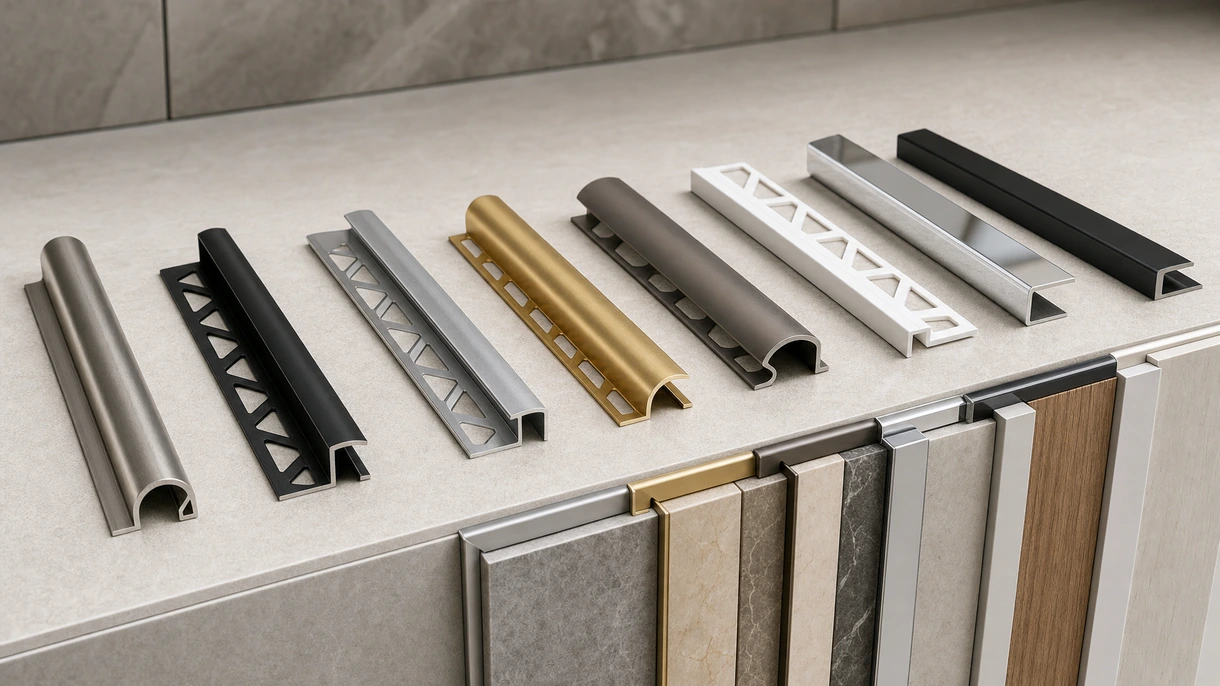
4 Criteria to choose your edge trim
Material Substrate Compatibility
Selection must match substrate thermal expansion and chemical properties to prevent adhesive failure or buckling in high-traffic commercial environments.
Mechanical Impact Resistance
Profiles require specific material hardness or alloy density to protect vulnerable corners against heavy trolley impacts and maintenance equipment.
Installation Depth Precision
Flange thickness must align perfectly with adhesive bed depth and tile gauge to ensure a flush, trip-free floor transition.
Environmental Certification Compliance
Specify recycled content and low-emissivity finishes to meet sustainability requirements for green hospitality and office interiors projects.
Available technologies and advantages
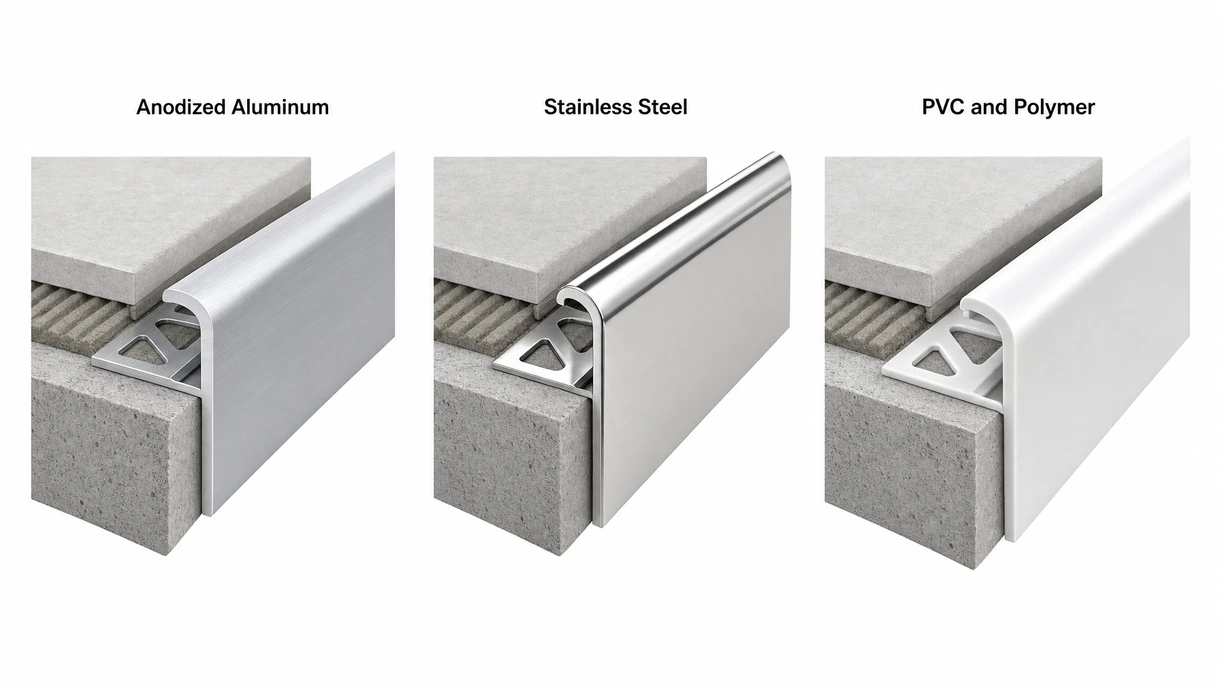
Anodized Aluminum Comparison
Extruded alloys offer superior linear precision and high corrosion resistance for tile protection, providing decorative and functional transitions between different floor surfaces.
Aluminum Trade-offs
These provide excellent durability and aesthetic variety but may pit when exposed to harsh acidic cleaning agents used on stone.
Stainless Steel Comparison
High grade steel provides maximum hygienic performance and chemical resistance, which is essential for commercial kitchens and high-moisture bathroom environments.
Steel Trade-offs
While offering unmatched longevity and structural strength, these components are harder to cut on-site and carry a higher procurement cost.
PVC and Polymer Comparison
Flexible thermoplastic profiles accommodate complex curved geometries and provide cost-effective solutions for wall protection in low-impact areas or residential wet rooms.
Polymer Trade-offs
They offer high versatility and easy installation but lack the sunlight stability and impact resistance required for heavy-duty exterior applications.
6 expert tips
Prioritize stainless steel profiles for high-traffic hospitality zones to minimize long-term maintenance costs and prevent visible corner damage.
Verify chemical compatibility between the trim adhesive and the substrate to ensure permanent bonding in damp bathroom environments.
Specify anodized finishes for external corners to provide ultraviolet protection and prevent oxidation in exposed retail storefront installations.
Mandate flush transitions between flooring materials to eliminate trip hazards and comply with strict accessibility standards for public spaces.
Calculate precise expansion joint placement within long trim runs to accommodate structural movement and prevent ceramic tile cracking.
Audit manufacturer material certifications to ensure compliance with local fire safety codes and environmental sustainability requirements for interiors.
Always verify the technical certification to ensure compliance with local building safety standards and long-term durability.
Innovations and Trends
Integrated light-emitting trim systems provide functional wayfinding lighting while protecting material edges in dark hospitality or theater corridors.
Bio-based polymer transitions offer a sustainable alternative to traditional plastics while maintaining the flexibility required for organic architecture.
Antimicrobial surface coatings on metal edges significantly reduce pathogen transmission in high-touch public restroom and healthcare facility environments.
Minimalist micro-profiles provide structural edge protection with a nearly invisible visual footprint to support contemporary seamless design aesthetics.
*Prices are pre-tax. They exclude delivery charges and customs duties and do not include additional charges for installation or activation options. Prices are indicative only and may vary by country, with changes to the cost of raw materials and exchange rates.
About ArchiExpo
ArchiExpo is a marketplace that offers B2B players a complete experience, from product sourcing to purchase. ArchiExpo is an entity of VirtualExpo Group.
Are you a buyer?
Are you a supplier?