
- Home page
- buying guide
- dining table
dining table
dining table: A technical guide
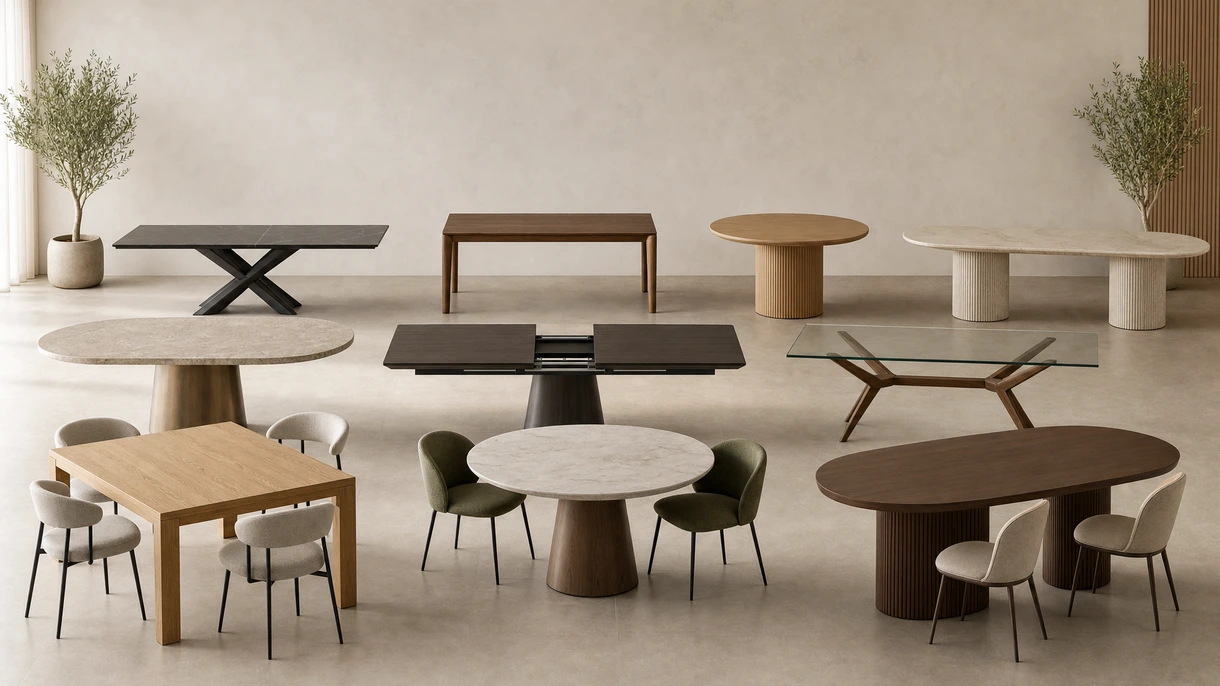
4 Criteria to choose your dining table
Material Durability Rating.
High-traffic hospitality environments require surface hardness ratings that resist scratching and heat damage during intense daily commercial use.
Structural Stability Compliance.
Weight distribution and base geometry must prevent tipping while accommodating specific legroom requirements for diverse end-user accessibility needs.
Surface Maintenance Standards.
Finishes must withstand industrial-grade cleaning agents and prevent microbial growth to meet rigorous health and safety hospitality regulations.
Spatial Footprint Optimization.
Modular dimensions allow for flexible layout reconfigurations in multi-purpose dining areas while maximizing seating capacity without compromising comfort.
Available technologies and advantages
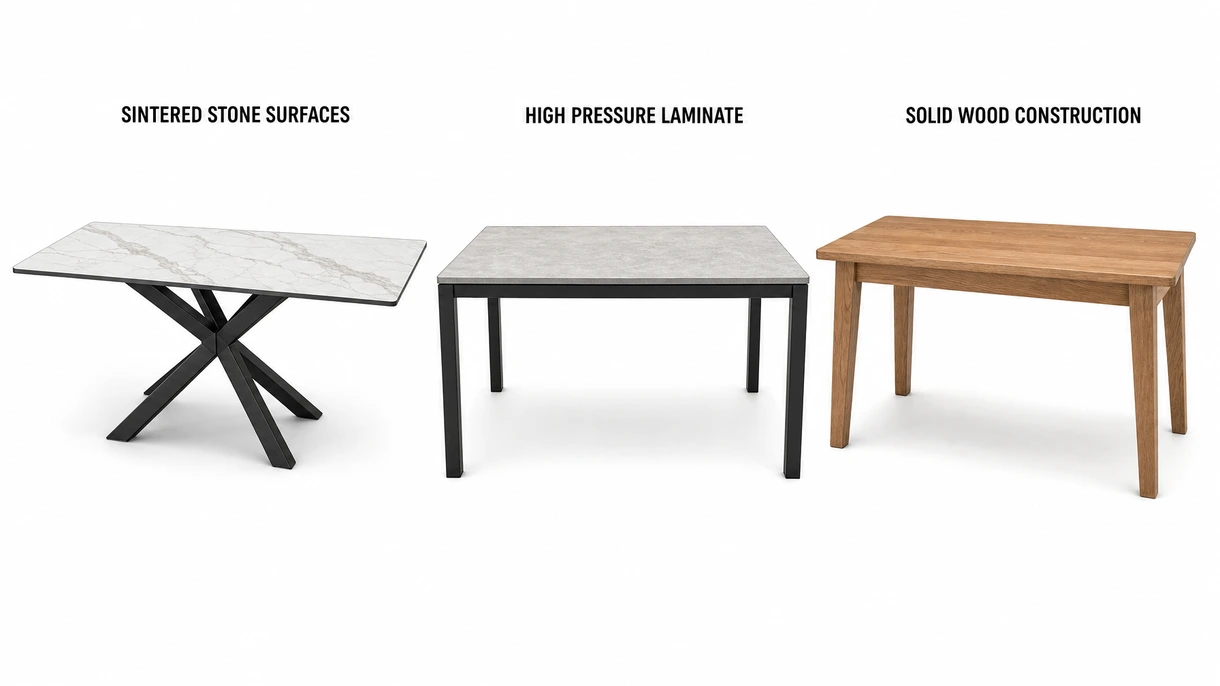
Sintered Stone Surfaces.
These porcelain-based materials provide maximum heat and acid resistance for heavy-duty use. The operational trade-off involves significant weight loads requiring reinforced substructures and expert installation.
High Pressure Laminate.
These resin-impregnated surfaces offer superior impact resistance and cost-efficiency. However, edge banding vulnerability remains a limitation compared to solid surfaces in heavy-moisture hospitality environments.
Solid Wood Construction.
These units offer high repairability through sanding, yet remain susceptible to humidity-driven dimensional changes. This trade-off balances timeless aesthetic warmth against higher maintenance and investment.
6 expert tips
Specify integrated cable management systems for communal tables to support modern device connectivity in professional hospitality and office settings.
Require contract-grade hardware and reinforced joining mechanisms to ensure structural integrity under the high-stress demands of commercial dining environments.
Choose non-porous antimicrobial surface materials to significantly reduce cross-contamination risks and streamline sanitation protocols in high-density public spaces.
Implement modular tabletop designs that allow for easy expansion or reconfiguration to accommodate varying group sizes and spatial requirements.
Select low-VOC finishes and sustainable sourcing certifications to meet environmental building standards like LEED or BREEAM for global projects.
Confirm edge profile ergonomics to improve user comfort and prevent injury in tight circulation areas within busy architectural layouts. Always verify the technical certification to ensure compliance with local building safety standards and long-term durability.
Innovations and Trends
Self-sanitizing surface treatments utilize silver ions to eliminate bacteria, meeting the strictest hygiene standards in modern public facilities.
Concealed heating elements beneath ceramic surfaces transform dining tables into cooking stations without compromising the clean minimalist design.
Carbon-negative materials derived from agricultural waste provide measurable sustainability gains while achieving industrial-grade structural performance for furniture.
Touch-sensitive surfaces with embedded digital displays allow for interactive dining experiences and automated ordering systems in hospitality.
*Prices are pre-tax. They exclude delivery charges and customs duties and do not include additional charges for installation or activation options. Prices are indicative only and may vary by country, with changes to the cost of raw materials and exchange rates.
About ArchiExpo
ArchiExpo is a marketplace that offers B2B players a complete experience, from product sourcing to purchase. ArchiExpo is an entity of VirtualExpo Group.
Are you a buyer?
Are you a supplier?