{{product.productLabel}} {{product.model}}
{{#if product.featureValues}}{{product.productPrice.formattedPrice}} {{#if product.productPrice.priceType === "PRICE_RANGE" }} - {{product.productPrice.formattedPriceMax}} {{/if}}
{{#each product.specData:i}}
{{name}}: {{value}}
{{#i!=(product.specData.length-1)}}
{{/end}}
{{/each}}
{{{product.idpText}}}
{{product.productLabel}} {{product.model}}
{{#if product.featureValues}}{{product.productPrice.formattedPrice}} {{#if product.productPrice.priceType === "PRICE_RANGE" }} - {{product.productPrice.formattedPriceMax}} {{/if}}
{{#each product.specData:i}}
{{name}}: {{value}}
{{#i!=(product.specData.length-1)}}
{{/end}}
{{/each}}
{{{product.idpText}}}
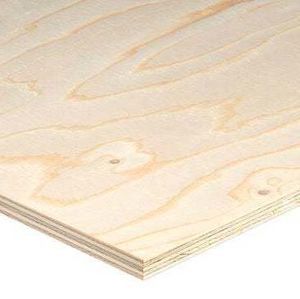

Thickness: 9 mm - 50 mm
Width: 120 cm - 125 cm
Length: 240 cm - 250 cm
... Overview
WISA-Spruce Special is a spruce structural multipurpose plywood panel with superior, defect-free surface quality. Light yet strong, it is designed for load-bearing structures and is also suitable for shopfitting, joinery, furniture ...
Wisa plywood


... Country / Place: CH/Flums Name of Project: Mountain Restaurant Prodalp Flums Product Category: Wall Cladding Material: Plywood 18mm Perforation: 50100 scaled Colour: naturally coated Architect/Planner: Atelier drü Architektur & Bauleitung ...
Bruag Design Factory AG

... Noble Perforated Oak Partition Walls of Bruag on Elbe Princesse Cruise Ship. Country / Place: FR/Saint-Nasaire Name of Project: Cruise Ship Elbe Princesse Croisi Europe Product Category: Room Divider, Stair Railing Material: Oak Plywood 18mm; MDF 19mm Perforation ...
Bruag Design Factory AG

... LED-backlit, perforated barfront as eye-catcher. Country / Place: CH/Winterthur Name of Project: Barfront Hotel Bananacity Winterthur Product Category: Wall Claddings Material: Oak Plywood 18mm Perforation: 40200 Colour: from customer Architect/Planner: Hugener ...
Bruag Design Factory AG
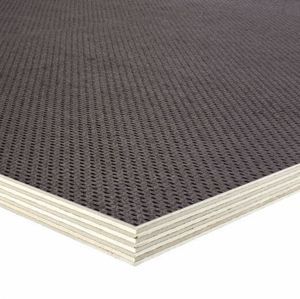

Thickness: 6.5 mm - 40 mm
Width: 100 cm - 153 cm
Length: 200 cm - 366 cm
... Overview
WISA®-Wire F is a coated plywood panel with improved fire safety properties designed for passenger transportation applications. The panel is manufactured from birch veneers bonded with weather-resistant glue. The enhanced fire safety ...
UPM


... The collection uses artistic verve and visual flair to re-interpret and re-imagine recycled wood, imbuing it with a new decorative richness. Featuring pure designs, elegant assemblies and natural forms, both sculpted and rudimentary, the collection ...


Thickness: 1, 1.5, 19 mm
Width: 1,220, 1,240 mm
Length: 2,500, 3,050 mm
Revive old materials and give them a new lease of life, while respecting the past. This is the true spirit of the Oak Vintage look. Oak beams which have been used in the railway system for many decades are now processed into veneer with a rich past and ...
Decospan


Thickness: 0.3, 0.5, 0.8, 1 in
Width: 48 in
Length: 96 in
Kirei Bamboo are eco-friendly bamboo panels and plywood material perfect for modern interior design and finished products. Bamboo is a rapidly renewable, sustainable resource, and we use low-VOC adhesives for the production of our panels. It’s your turn ...


Multi-layered or sandwich panels, in manufactured or machined faces, used in industrial joinery for the production of outside doors, entrances, service, bases, french windows and portals/gates.
TOUBOIS


Width: 1,000 mm
... MULTICEL is an expanded opaque rigid PVC sheet. The homogeneous cellular structure of MULTICEL and its satin surface lend themselves easily to all uses of wood and marine plywood. Lightweight, with high impact resistance, and great stability in the ...


Thickness: 12 mm
Width: 1,205 mm
Length: 2,905 mm
MISTRAL PANELS


Thickness: 16 mm - 42 mm
Width: 2,070 mm
Length: 2,600, 5,200 mm
... Bonding: IF20 (interior applications) or AW100 (exterior applications) Emission class E1. Core material made of fully-bonded spruce, pine or poplar blocks. Bonding: IF20 (interior applications) or AW100 (exterior applications) Emission class E1. ...
SWL TISCHLERPLATTEN BETRIEBS-GMBH


Thickness: 4 mm - 40 mm
Width: 1,530, 1,220 mm
Length: 3,100, 2,500 mm
... Okoume throughout Plywood IAW BS 1088 Joinery works, internal fittings in boat building. Constructions in exposed exterior environments. Use in load bearing applications. FACES II / III BONDING class 3 SERVICE class 3 SURFACE FINISHING sanded ...
Groupe THEBAULT


Thickness: 3 mm - 50 mm
Width: 1,220 mm - 3,130 mm
Length: 2,120 mm - 3,130 mm
NVERNIZZI’s poplar plywood is a natural product manufactured using poplar veneers (at least 3 plies), which have been overlaid with the wood grains running perpendicularily and glued. It is manufactured according to the formaldehyde emission control rules ...
INVERNIZZI SPA


Thickness: 25, 15, 4 mm
... Outdoor okoumé plywood Plywood panel with phenolic or melamine gluing made exclusively of Okoumè wood Durability Resistance against atmospheric agents Low weight CARB EPA TSCA TITLE VI ...
BELLOTTI
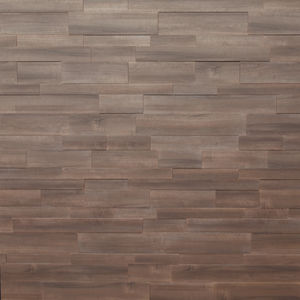

Width: 6, 4, 5 in
... Ashlar is comprised of pieces that are 3, 4, 5 and 6 inches wide and 1/2, 5/8 and 3/4 of an inch thick. Each piece is connected to a backerboard of 12mm baltic birch plywood using small dowels and secured with wood glue, a construction mastic, or (careful) ...
INTERLAM


... Higuera Hardwoods single layer strand woven bamboo panels are manufactured with only the finest Moso bamboo and European resins to ensure a higher quality strand woven bamboo product for your projects. Single layer strand panels are perfect for wainscoting, ...
Higuera Hardwoods- The Finest Bamboo Products

With a world limited only by your imagination, Vicaima Match presents some inspiring suggestions that reflect alternate styles and décors. From the most luxurious to natural simplicity, these proposals can be depicted in different elements, creating a ...
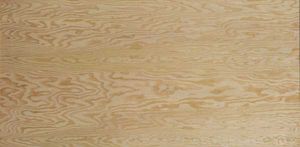

Roseburgs AB Marine Panel is marine-grade plywood that is produced entirely of Group 1 species of veneer. The Panel is sanded on both faces. The maximum core-gap size permitted is 1/8 inch. Its exposure durability rating is EXTERIOR and the glue used ...
ROSEBURG


Thickness: 3 mm - 40 mm
Width: 1,220, 1,300, 1,530 mm
Length: 2,500, 3,050, 3,100, 2,440 mm
Plywood is an engineered wood, it is a sheet material manufactured from thin layers or «plies» of wood veneer that are glued together with adjacent layers having their wood grain rotated up to 90 degrees to one another (sandwich) making it highly resistant ...
FINIXIA


Thickness: 0, 0.8 in
Width: 4 in
Length: 6 in
Teragren’s strand bamboo panels and veneer are ideal for any interior use where hardwood may traditionally be used, including cabinetry, reception areas, wall treatments, furniture and more. Our Xcora strand panels and veneer machine nicely, finish cleanly ...
Teragren Bamboo Flooring, Panels/Veneer + Worktops



Thickness: 3 mm - 40 mm
Width: 1,220 mm - 3,120 mm
Length: 1,870 mm - 3,120 mm
... Composition Poplar plywood totally made of poplar veneers. Outer faces with longitudinal grain. Cross grain or unidirectional grain available on request. Features Suitable for those entire application fields that enhance all its main features: lightweight, ...
panguaneta plywood


... Okoume throughout Face veneers II/II grooved on 1 side Okoumé rainuré, grooved on 1 side, is a decorative panel used for outside joinery, garage or house entrance doors and the decoration of façades, but also to reproduce an interior ...
Groupe Joubert
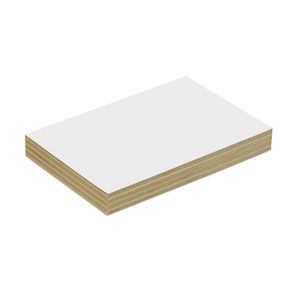

... Ultra durable pre-painted panel sourced from sustainable plantation woods for outdoor use in the most demanding conditions. Modified plywood by means of an innovative ply-to-ply impregnation treatment which brings an exceptional durability to the whole ...
Garnica Plywood
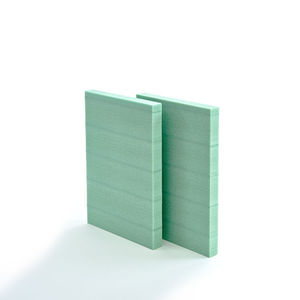

Thickness: 9 mm - 25 mm
Width: 1,220 mm
Length: 2,440 mm
... Product Overview: ArmaPET LightPly is designed to meet the evolving demands of the plywood industry, showcasing a refined blend of features that cater to the lightweighting trend. This innovative material achieves a remarkable weight reduction of 50 to ...