
- Home page
- buying guide
- prefab house
prefab house
prefab house: A technical guide

4 Criteria to choose your prefab house
Thermal Performance Certification
Passive house standards ensure long-term operational cost reduction and compliance with stringent European and North American energy building codes.
Supply Chain Scalability
Reliable factory throughput determines project viability by ensuring consistent delivery timelines for multi-unit residential or commercial hospitality developments.
Precision Engineering Tolerances
Millimeter-level accuracy in manufacturing minimizes on-site assembly errors, reducing labor costs and material waste compared to traditional construction.
Structural Material Compliance
Selecting systems meeting local seismic and wind-load requirements is essential for legal permitting and long-term asset structural integrity.
Available technologies and advantages
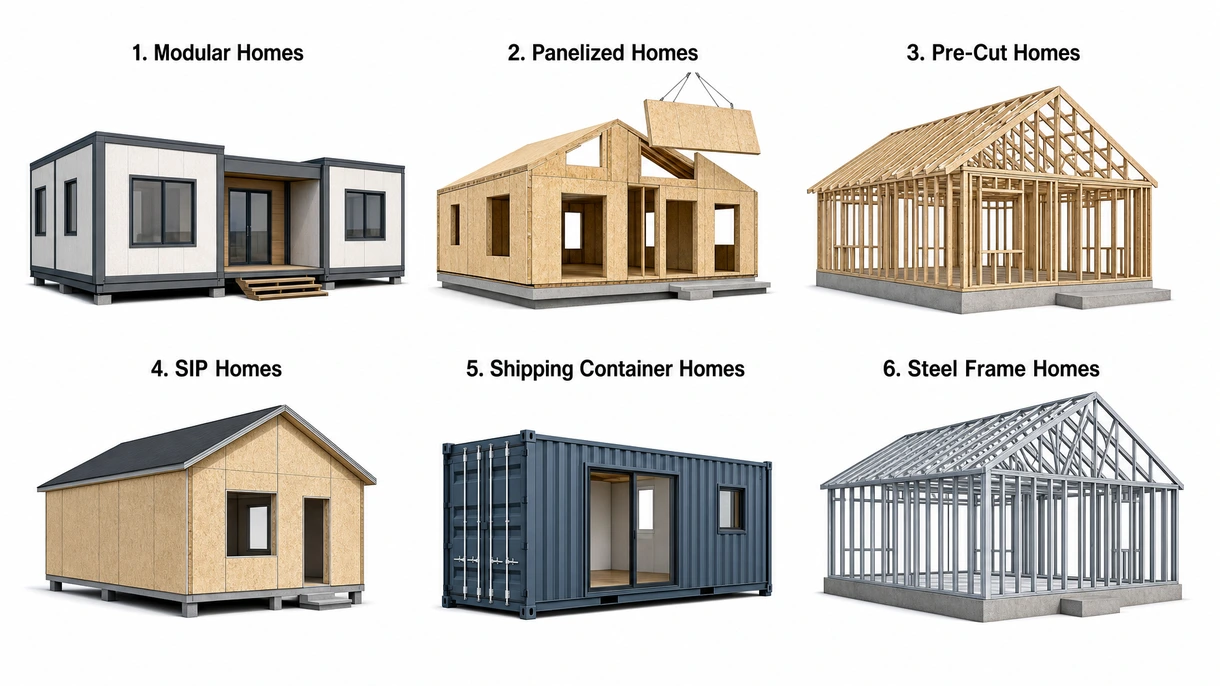
Item 1
This mass timber technology provides high strength-to-weight ratios, facilitating faster vertical assembly compared to traditional masonry or poured-in-place concrete systems.
Item 2
Advantages include significant carbon sequestration and aesthetic appeal. Limitations involve moisture sensitivity and acoustic flanking. The trade-off requires high-end membrane protection versus speed.
Item 3
Cold-formed steel offers superior dimensional stability and precision for high-volume modular production, ensuring consistency across large-scale residential developments and hospitality projects.
Item 4
The primary advantage is non-combustibility and rot resistance. Limitations include high thermal conductivity. Operational trade-offs involve managing thermal breaks against manufacturing complexity.
Item 5
Factory-cast concrete delivers exceptional fire ratings and thermal mass, offering a robust alternative to timber-based systems for permanent urban high-density housing solutions.
Item 6
High durability and soundproofing are key advantages. Significant weight limitations increase shipping costs. Developers must balance structural longevity against specialized heavy-lifting logistical requirements.
6 expert tips
Prioritize manufacturers offering fully integrated MEP systems to eliminate complex coordination errors during the final site assembly phase.
Evaluate the logistic feasibility of module dimensions to prevent excessive transport permitting costs from impacting the total budget.
Conduct thorough audits of factory quality control protocols to ensure every component meets the specified architectural performance standards.
Negotiate fixed-price contracts that include delivery and assembly to mitigate the risks associated with volatile on-site labor markets.
Select vendors with proven experience in international building certifications to streamline the permitting process for multi-regional project rollouts.
Always verify the technical certification to ensure compliance with local building safety standards and long-term durability.
Innovations and Trends
Computational algorithms optimize floor plans for maximum energy efficiency and material reduction, lowering overall construction costs by fifteen percent.
Real-time sensor integration during manufacturing provides a lifecycle data record, improving maintenance schedules and long-term facility management efficiency.
Design for Disassembly protocols allow structural components to be repurposed, meeting emerging European regulations regarding building material waste reduction.
Large-scale additive manufacturing reduces labor requirements by forty percent while allowing for complex, high-performance architectural geometries in residential.
*Prices are pre-tax. They exclude delivery charges and customs duties and do not include additional charges for installation or activation options. Prices are indicative only and may vary by country, with changes to the cost of raw materials and exchange rates.
About ArchiExpo
ArchiExpo is a marketplace that offers B2B players a complete experience, from product sourcing to purchase. ArchiExpo is an entity of VirtualExpo Group.
Are you a buyer?
Are you a supplier?