


{{product.productLabel}} {{product.model}}
{{#if product.featureValues}}{{product.productPrice.formattedPrice}} {{#if product.productPrice.priceType === "PRICE_RANGE" }} - {{product.productPrice.formattedPriceMax}} {{/if}}
{{#each product.specData:i}}
{{name}}: {{value}}
{{#i!=(product.specData.length-1)}}
{{/end}}
{{/each}}
{{{product.idpText}}}
{{product.productLabel}} {{product.model}}
{{#if product.featureValues}}{{product.productPrice.formattedPrice}} {{#if product.productPrice.priceType === "PRICE_RANGE" }} - {{product.productPrice.formattedPriceMax}} {{/if}}
{{#each product.specData:i}}
{{name}}: {{value}}
{{#i!=(product.specData.length-1)}}
{{/end}}
{{/each}}
{{{product.idpText}}}
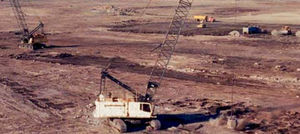

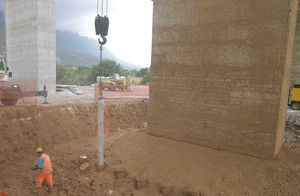
... Dynamic Compaction (DC) is a cost-effective soil improvement technique that achieves deep ground densification using high energy waves created by the repeated impacts of heavy weights (pounders). The pounders used for dynamic compaction generally ranges ...
Trevi Group


... Nidaplast RA lightweight embankments are extremely light and resistant. These honeycomb structures are the recommended solution for constructing landscape embankments, road embankments, or building embankments. Use: Road and landscaping embankment Material: ...
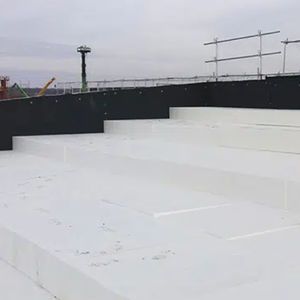
The large-sized and highly durable Nidastyrene RA expanded polystyrene blocks are designed for large-scale projects, for landscaped, road and building embankments. The creation of a lightweight backfill can reduce the vertical and horizontal stresses ...


isolera I 100 PURE is a two-component, phthalate-free, water-reactive and very fast foam injection resin, which is used as a waterstop system. Component B is a catalyst; if the dosage is lower than specified, the reaction time will be longer. On contact ...
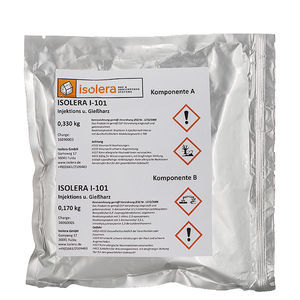
... Epoxy resin for the repair of cracks in floors in combination with screed clamps isolera injection resin I 101 is a solvent-free, unfilled and unpigmented 2-component reactive resin based on epoxy resin for force-fit closing of cracks in screed and ...
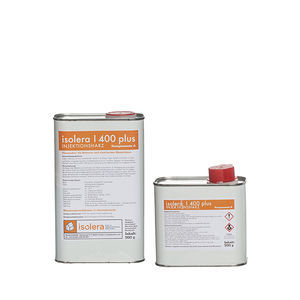
isolera Injection Resin I 400 Plus is a two-component, water-reactive, phthalate-free, foaming and elastic injection resin. When in contact with water, the material reacts and forms a fine-cell elastic foam; when no water is present, isolera Injection ...
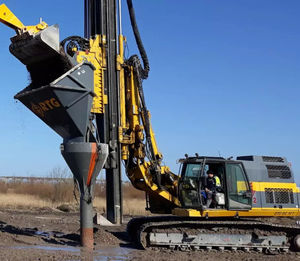

... Soil improvement by means of stone columns results in the construction of cylindrical elements, cast-in-situ, consisting of gravel that is compacted by driving, or by using vibroflotation (vibro-compaction). Construction sequence Installation process ...
FRANKI FOUNDATIONS BELGIUM


... For light aggregates with high load requirements and dynamic applications of force in infrastructure, road construction and rail transport. Heavily trafficked light aggregate on or against structures Special features: • Extremely high stability • ...
MISAPOR
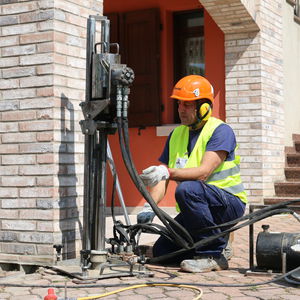

... SEE&SHOOT (Patent n. EP 1914350) is an efficacious method for consolidating ground foundations designed to combat differential subsidence in buildings. It is rapid (on average only a few days are required) and it provides an effective solution without ...
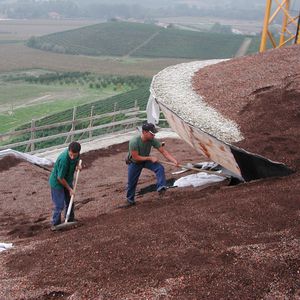

... Volcanic substrate for green roofs, urban and vertical green plants APPLICATION FIELDS: – Grass carpets – Hanging gardens – Urban arrangements – Vertical green plants – Management and maintenance of green ...
Europomice
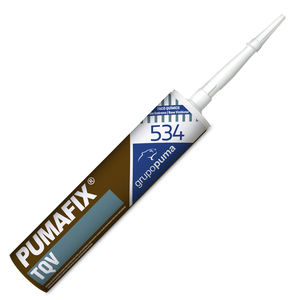

... 2-component fast curing vinylester injection resin. Composition Pure resin based vinylester (styrene free). Features and applications Chemical bonding of horizontal and vertical anchors. Suitable for wet and dry substrates. Indoor and outdoor. Suitable ...
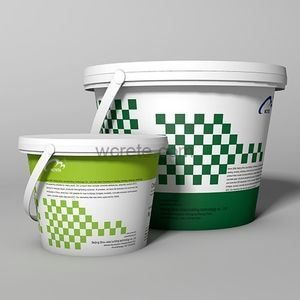

... two-component modified epoxy low-viscosity liquid adhesive for filling the concrete crack Application: ◆ Concrete cracks (0.1~1.5mm) and internal defects (honeycombs, holes) are repaired by grouting. ◆ It is mainly applied to the concrete cracks ...
Sino-sina building materials co., ltd
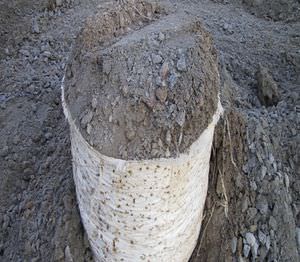

Geotextile encased columns, in woven polyester, for ground improvement and piling applications

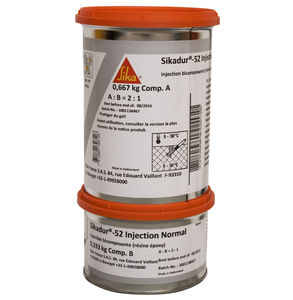

... Epoxy low viscosity injection resin - normal pot life Sikadur®-52 Injection Normal is a 2-part, epoxy, low viscosity, normal pot life, injection resin specially formulated for crack injection work by either pressure injection or gravity feed techniques. Usage Sikadur®-52 ...
Sika France SAS
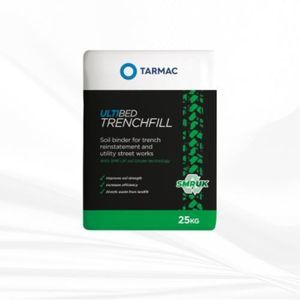

... Overview
Ultibed Trenchfill is a soil binder that enables soil from utility trench excavation to be processed on site and reused as a structural reinstatement material. The treated material delivers significantly greater strength than traditional ...
Tarmac Building Products
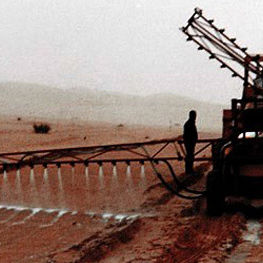

Formulated resin for consolidation and stabilization of sands and grounds in general. The consistent layer, obtained with this product, shows characteristics of elasticity, compression resistance and elevated flexibility; it resists atmospheric agents ...
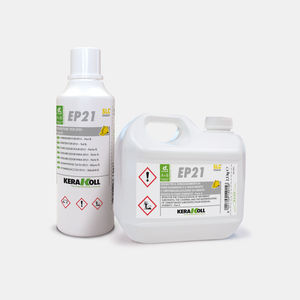

... Organic resin for the consolidation of absorbent substrates, the creation of finishings and epoxy screeds, and waterproofing of cement‑based substrates with high residual moisture. EP21 raises the mechanical resistance of inconsistent substrates and ...
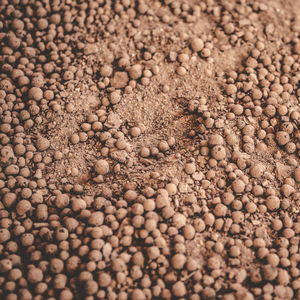

... Terra Forma clay filling mixed with chaff e.g. flax, hemp, straw, miscanthus, spelt husks, recycled cork or expanded clay Application areas: The fill is ideal for •filling of wooden beam ceilings low weight •for internal insulation of external ...
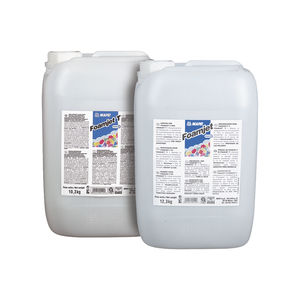

... High viscosity ultra rapid setting two-component polyurethane resin, to be injected for consolidating and waterproofing of structures subject to strong water ingress Where to use • Waterproofing rock or lose ground diggings, dams, shafts or tunnels where ...
MAPEI GB