|
|
Soilfrac® is a process used to control or reverse the settlement of structures. It consists of the injection of material into the soil between the foundation to be controlled and the process causing the settlement. The material injected is forced into fractures thereby causing an expansion to take place counteracting the settlement that occurs or producing a controlled heave of the foundation.
Because the process requires that the soil is fractured and not permeated, Soilfrac® may be used in most soil types ranging from gravels to clays or weak rocks.
|
|
The technology of injection to consolidate and re-compress soil, known in the technical literature as compaction grouting, is a solution aimed at compacting and amassing soft or altered, decompressed soil.
This technology was developed and used mainly to resist settling of structures and buildings; today compaction grouting is a valid solution for application in situations such as:
- stabilizing, consolidating and recovery of existing foundations, structures and buildings
- consolidating soil characterized by poor load-bearing capacity
- filling in cavities or blockage of soil that is particularly “open” or porous.
|
|
Compaction grouting is suitable for wet to saturated sand, silt and clay. It consists of pressure grouting the ground with a high viscosity mortar in a pattern designed to suit the specific features of the site.
It is a proven, economical and versatile technology whose benefits include reducing the risk of liquefaction during an earthquake. It can be used to improve the foundations of existing structures.
|
|
The grouting technique is used to improve soils and certain man-made structures (masonry, concrete, etc.)
-Filling of natural cavities (karsts, dissolution voids, etc.)
-Filling of man-made cavities (especially underground quarries)
-Re-compacting of accidentally decompressed soils (water leakage, nearby excavations)
-Filling of soil fissures to prevent water flow (cut-off curtain wall under a dam, containment cut-off wall around excavations or a shaft, etc.)
-Permeation of sands and gravels using a liquid product which sets after
injection
|
|
|
|
|
|
Dynamic deep compaction (DDC) is an important ground improvement technique, capable of compacting a wide variety of weak soils. The improvement results in increased bearing capacity and reduced settlement. In this way soil conditions on many marginal sites can be improved to the point where shallow foundations can be used without recourse to deep excavation or piling.
Whilst the principle of dynamic deep compaction is of considerable antiquity, it is only in the past 15 years that the technique has been seriously applied on a large scale to the solving of problems by ground improvement. Keller have been actively engaged in successfully applying the system internationally during this period, and are able to offer DDC alongside their other geo-technical techniques to provide a complete ground engineering service.
With DDC, the ground is subjected to repeated surface tamping using a heavy steel and concrete weight. Typically the tamper weighs between 5 and 20 tonnes, dropping in free fall from heights of up to 25 metres. The tamper is dropped a set number of times on a grid pattern over the site to form a pass. Two to five passes on a site, dependent on soil type and condition, can be required. The imprints formed at each drop position are infilled with granular material after each pass.
|
|
|
This method is also known under the name of Heavy Tamping and it is employed in order to reduce the risk of liquefaction. It consists in the repeated application of a high-density impact on the surface of cohesion-less soils. This method induces the soil liquefaction and increases the relative density until reaching a potential range of non-liquefiability. The maximum effectiveness of the method is 30 m.
|
|
|
This is a method of improving the ground from the surface for industrial or commercial development. Dynamic compaction can improve granular soils to depths of 5-10 metres. Stone piles extend the method to more cohesive soils. The procedure is to drop heavy weights of several dozen tonnes repeatedly onto the soil from a height of several dozen metres.
|
|
This is a method of improving the ground that involves compacting by hammering the earth in a matrix or in stages depending on the type of soil and the degree of improvement required.
It is generally used on low-power granular soils and landfills as the kinetic energy transmitted during the hammering reaches a few metres down. .
|
|
Definition:
compaction of the ground using an important mass with or without incorporation of materieux (gravel)
Characteristics:
the vibrations peuvetn êter followed and the lawsuit can be adapted to guarantee a maximum amplitude of vibrations
Scope of application:
reduction of compressings
exploitation of the recently embanked grounds
|
|
Compaction Grouting uses controlled displacement to increase the density of soft or loose soils. It is typically used for settlement control, structural re-leveling, and remediation of sinkholes. A small diameter (2" - 4") steel casing is advanced through the zone to be improved, and a stiff mortar-like grout is injected at high pressure to displace and compact and the surrounding soils. Pumping is continued as the grout casing is withdrawn, forming a larger diameter (12" - 18") column of interconnected grout bulbs. As they form, they intensely compact the soil around them. Compaction
piles can be formed in the same manner to create a continuous structural support for
foundations.
|
|
|
The improvement of poor soils by depth vibrators is an innovation of Keller. For the treatment of non-cohesive and cohesive soil formations different types of depth vibrators and various techniques are available. Together with the different methods of soil improvement a wide range of pile foundations and similar foundation techniques are available.
|
|
|
|
|
|
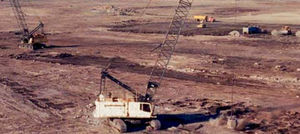
The technique consists of methodically and repeatedly dropping heavy steel weights onto the surface of soils requiring improvement. The resulting impacts create powerful compression and shear stresses that reach considerable depths and induce volume reduction within the soil masses, improving their geotechnical properties. Using specially modified powerful crawler cranes, the weights or tampers are hoisted and released as a quasi free fall. The weight of these tampers usually varies between 10 and 18 tonnes, but with special hoisting systems it can reach 30 tonnes or more to achieve greater improvement depths. The tampers are typically dropped from 10 to 25 metres above the work platform.
The energy applied to the ground upon impact is measured in tonne-metres (t-m) and the magnitude of the energy per drop is a determinant factor in the degree and maximum depth of improvement achieved. Other significant parameters affecting both the depth and degree of improvement are the overall design of the energy application program, the proper phasing of the work, the right number of impacts per grid point, and the close monitoring of the soil response as work progresses. The increase and the subsequent rate of dissipation of pore pressures, the variations of induced settlements throughout the site, heaving, etc. are all elements which must be closely monitored and evaluated throughout the treatment.
Dynamic Compaction is an extremely rapid technique compared to other methods, and in loose granular soils of 12 metres or less, it is unquestionably the most economical of all existing soil improvement techniques.
|
|
Until now, the techniques employed to consolidate with foamed resins consisted in carrying out injections below the foundations of buildings. These injections, featuring either fast or slow expansion, were free flowing directly into the soil, whether just below the foundation or deeper underground.
The constant efforts by Novatek to find increasingly efficient solutions has helped us to develop an avant-garde method that guarantees even and deep consolidation of the soil below the foundation, allows the foamed resin injections to be confined and avoids wasteful and harmful dispersions into surrounding areas.
This system features columnar injections of foamed resin into pre-compacted soil via radial hydraulic expansion.
|
|
|
|
|
|
In order to produce a watertight excavation the excavation base has to be watertight as far as possible apart from the retaining on the side. If there is an impermeable soil stratum of sufficient strength in reachable depth, the most functional solution is often to take the retaining walls to the deep horizon. In cases where this does not apply and where relatively permeable soil exists, the grout blanket proves a state-of-the-art and most economic solution for preliminary sealing of the excavation base.
Soft gel injections are applicable for sealing measures in fine grained soils like sands as well as in coarse soils like gravel, as the pore voids can only be insufficiently closed with conventional cement injections. With soft gel bases, however, an adequate sealing can be guaranteed.
In general, the soft gel base can be combined with all watertight retaining walls. From today's knowledge these are the following:
Cast-in-situ diaphragm walls
Diaphragm walls
Sheet pile walls
Single phase cut-off wall
Secant Pile and MIP walls
Injection walls
Thin cut-off walls.
|
|
|
|
|
|
Keller's Vibro Replacement method of constructing stone columns through fill material and weak soils, to improve their load bearing and settlement characteristics, provides an economic and technically sound solution to a wide range of geotechnical and foundation problems.
To construct the stone columns, the vibrator is allowed to penetrate to the design depth and the resulting cavity is filled with hard inert stone, free of clay and silt fines. The required interaction between the stone columns and the surrounding soils, is developed by the stone infill being introduced and compacted in stages, each charge of stone being thoroughly compacted.
The stone columns and the confining soils form an integrated foundation support system having low compressibility and improved load bearing capacity. In cohesive soils, relatively rapid consolidation is achieved through excess pore water pressures being readily dissipated by the stone columns.
The stone column layout can be arranged to suit varying combinations of load, soil type and required settlement performance. In general, column spacings are in the range of 1.2 to 2.3 metres beneath main load bearing foundations, and up to 3.0 metres beneath floor slabs.
|
|
|
The improvement of poor soils by depth vibrators is an innovation of Keller. For the treatment of non-cohesive and cohesive soil formations different types of depth vibrators and various techniques are available. Together with the different methods of soil improvement a wide range of pile foundations and similar foundation techniques are available.
|
|
|
The main principle of this technique is a high kinetic energy cement grout jet to break up the terrain, and then adding cement to provide it with compression and shear strength comparable to a concrete floor.
|
|
Jet grouting is a procedure for the insitu construction of solidified ground of pre-determined shape, size and depth, to a designed characteristic (strength, permeability, flexibility). This solidified ground is known as Soilcrete.
Advantages
- A more predictable degree of soil improvement.
- A high level of permeability control.
- Geometric flexibility.
- Improved cost forecasting over alternative processes.
- Minimal vibration and noise.
- Ability to operate in headroom as low as 3.0m.
- Minimum site disturbance and limited working space required.
- Only environmentally acceptable grouts are used in the process.
- Installation beneath foundations from outside building.
- Encapsulation of obstructions including services.
|
|
|
|
|
|
By means of the TREVIJET system it is possible to obtain columns with the following diameters:
- 0,35 – 1,00 m by means of TREVIJET T1
- 0,60 – 1,00 m by means of TREVIJET T1/S
- 1,40 – 3,00 m by means of TREVIJET T2
Said dimensions and the mechanical features of the treated soil highly depend on the combination of several elements such as the nature of the soil, the applied pressure, the monitor’s rotation and extraction speed and the composition of the grouting mixture.
With the aim of optimising all these variables and obtaining the best technical productive result, Trevi developed and tested in several sites a whole set of drilling and grouting rigs characterised by a highly advanced technological content as well as advanced checking systems. In this way, it is possible to work with large-size equipment that are assembled on cranes for vertical treatments at remarkable depths, or small size drill rigs suitable for working in basements and in reduced areas in case of consolidations of pre-existing buildings and monuments.
Last but not least in importance, we must mention the application of the TREVIJET system in case of sub-horizontal treatments for preventive consolidation works of tunnels, before the excavation, in loose and un-cohesive soils.
|
|
Jet grouting is a construction process using a high kinetic energy jet of fluid to break up and loosen the ground, and mix it with a thin slurry.
It is not truly grouting but rather a hydrodynamic mix-in-place technique producing a soil-cement material.
The concept first appeared in the late fifties in the United Kingdom. Single, double and triple jets carry the necessary hydrodynamic energy to break up and mix the soil with the slurry. It is suitable for mass treatment, linear treatment and inclusions, in soils of good to poor groutability.
|
|
Terratest has been performing Jet-Grouting for over 15 years. It is therefore one of the pioneers in the business in Spain and also one of the most reliable companies for the job. Highly qualified personnel and equipment are required for this purpose due to the specific nature of the technique and the risks involved with using fluids - water, air, cement - at high pressure and flow speeds.
Given its versatility, Jet-Grouting is more and more widely used to solve foundation problems in construction projects such as:
* Fore-slabs for water-proofing the bottom of core walls
* Core walls used to control the water table
* Foundation underpinning
* Improvement of soft soils
* Embankment foundations
* Embankment consolidation
|
|
|
Injections are used for ground improvement. Existing voids like pores in gravel or in unconsolidated material are filled under pressure with a hardening material, in order to stabilise or seal the soil. Drilling is done with techniques suitable for the prevailing soil condition. Injections can be used for under-pinning buildings, as a security measure at driving of tunnels and galleries or to seal deep excavations or dams. The selection of the injection material depends on the soil condition and on the application. If injections are no longer possible due to the soil condition, the jet grouting technique (the so-called "High Pressure Injection" is applied.
|
|
|
Compaction grouting uses higher pumping pressures and a stiffer grout to create a enlarged bulb at the point of exit, thus compacting the surrounding strata by compression and rendering the soil less permeable. This increases the bearing capacity of the soil. This technique is useful in correcting differential settlement and uplifting settled solid floors.
|
|
|
|
|
|
TecSoil Srl of Noceto (PR) has patented an innovative injection technique called MiniJet that offers the possibility to reduce the operative phases, typical of the Jet Grouting technology applied to the realization of anchor-rods and/or reinforced micro-piles, thus optimizing productivity.
This technique foresees the use of a perforation/injection system instead of the usual jetting equipment, made up of:
Sacrificial drill bit with no. 2 nozzles for the high pressure cement grout injection.
Sacrificial steel hollow rods/rebar (DN est. 32 - 38 - 51 - 76 mm) with improved adherence through continuous threading along the entire exterior surface.
Rebar/rebar couplers with no. 2 high pressures seals.
Multiple uses high pressure swivel head.
The point of strength of the MiniJet system, tested to be used with injection pressures up to 400 Bar, consists of its simplicity of use. This allows to operate with small sizes equipment also in very difficult conditions such as city ones, ensuring good technical result and considerable productions as the ones of the traditional jet-grouting job sites.
With the "MiniJet" technology, the activity is from the ground surface to the bottom of the hole (In case of a vertical column) and takes places contemporaneously with the drilling and the injection phases; in this way is created a jet-grouting column starting from the natural surface level until the final project's level (Jetting-in).
The diameters of the columnar elements can vary from 0.3 to 0.6 m according to the specific need of the work and according to the type of ground on-site.
In addition to the unquestionable advantage to reduce working times, the MiniJet technique is particularly reliable since the over-pressures that can be formed through the use of the traditional jet-grouting technique are reduced; as a consequence, there is also a considerable reduction of the quantity of spoil materials and lastly but very importantly, the perforation/injection equipment is left in the ground, thus constituting the steel reinforcement of the consolidated ground column ("Lost in the hole").
Thanks to the external shape of the "MiniJet rebars" with improved adherence and thanks to the use of high resistance steel, the reinforcement thus realized can be easily used as passive or active anchor.
|
|
The term "Pressure Grouting" is in widespread use, but it is frequently misused. Although it seems to describe a specific type of grouting, the term is not specific. It refers to a wide variety of procedures. All grouting is done under pressure, so it is kind of like saying, "wet water". Permeation Grouting is a more precise term for what is commonly referred to as pressure grouting.
Permeation grouting is the direct pressure injection of a fluid grout into the ground to fill the spaces between particles.
It is a very flexible approach to ground improvement.
|
|
|
The process of permeation grouting uses a grout to fill voids or interstices in the ground without significantly changing the original volume of the soil. The grout is designed to be fluid enough to adequately penetrate pores and fissures under controlled and low injection pressures whilst limiting its travel beyond the treatment zone.
|
|
|
|