


Floating screed X-FLOOR® PROquick-dryingcementhigh-resistance

Add to favorites
Compare this product
Characteristics
- Type of screed
- floating, quick-drying
- Material
- cement
- Other characteristics
- high-resistance, for underfloor heating, non-shrink
Description
Product description
Ready-mixed, fluidised structural screed designed for rapid drying and controlled shrinkage. Formulated for use with porcelain stoneware, ceramic tiles, natural stone, parquet, microcement, resin finishes and all types of resilient coverings. Non-shrinking and suitable for incorporation of underfloor heating coils. Applicable for bonded or floating screeds in both indoor and outdoor environments.
Key features / Advantages
Application times (as stated)
Coverage
19 kg/m² per cm of thickness
Technical specifications
Ready-mixed, fluidised structural screed designed for rapid drying and controlled shrinkage. Formulated for use with porcelain stoneware, ceramic tiles, natural stone, parquet, microcement, resin finishes and all types of resilient coverings. Non-shrinking and suitable for incorporation of underfloor heating coils. Applicable for bonded or floating screeds in both indoor and outdoor environments.
Key features / Advantages
- Ready-mixed: only water required on site, eliminating binder dosage and aggregate selection errors.
- Extended workability with normal setting times and rapid drying.
- Non-shrinking; controlled shrinkage for dimensional stability.
- Excellent pumpability and workability, compatible with pressure-pump application.
- Enables construction of screeds with embedded underfloor heating without additional fluidising additives.
- Practical for historic centres or constrained sites where handling loose aggregates is difficult.
Application times (as stated)
- Ceramic tiles: after 24 hours.
- Natural stone: after 2 days.
- Parquet, PVC, linoleum and carpet: after 3 days (alternate mention of 4 days appears in some references).
Coverage
19 kg/m² per cm of thickness
Technical specifications
- Brand: Litokol
- Commercial name / model: X-Floor® Pro
- Formulation: ready-mixed, fluidised hydraulic binder (structural screed)
- On-site mixing: requires only addition of water
- Mechanical properties: high mechanical strength
- Shrinkage: controlled shrinkage; non-shrinking
- Setting / drying: normal setting time and rapid drying (see application times)
- Workability: excellent; suitable for application with pressure pump
- Underfloor heating: suitable; compatible with screeds incorporating heating coils without fluidising additives
- Use areas: indoor and outdoor
- Compatible finishes: porcelain stoneware, ceramic tiles, natural stone, parquet, microcement, resins, resilient floor coverings
- Coverage rate: 19 kg/m² per cm of thickness
- Packaging / handling: ready-mixed (advantageous where handling loose aggregates is difficult)
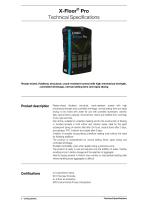
Catalogs
Exhibitions
Meet this supplier at the following exhibition(s):
Other LITOKOL products
Anti-fracture Installation Substrates


Related Searches
- Coating
- Building coating
- Indoor coating
- Exterior coating
- Concrete coating
- Concrete mortar
- Cement mortar
- Adhesive mortar
- Adhesive glue
- Additive
- Cement-based coating
- Cement adhesive mortar
- Smoothing mortar
- Concrete additive
- Gray coating
- Tile adhesive mortar
- Waterproof mortar
- Wood coating
- Flooring screed mortar
- Quick-set mortar
*Prices are pre-tax. They exclude delivery charges and customs duties and do not include additional charges for installation or activation options. Prices are indicative only and may vary by country, with changes to the cost of raw materials and exchange rates.
About ArchiExpo
ArchiExpo is a marketplace that offers B2B players a complete experience, from product sourcing to purchase. ArchiExpo is an entity of VirtualExpo Group.
Are you a buyer?
Are you a supplier?